Cleaning & Care
Looking after floors
Different floor types require genuinely different treatment, and using the wrong method causes most of the damage.
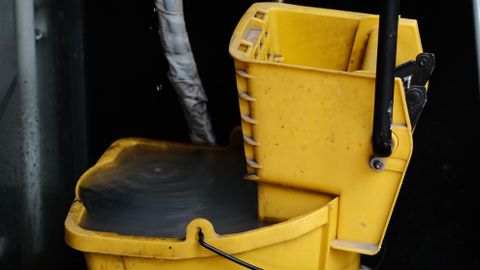
Floors are the largest surface in a house and the one where inappropriate cleaning does the most cumulative damage.
The universal principles
Applicable to every floor type.
Grit is the enemy. Almost all floor wear is abrasion from particles trodden in from outside.
Which means doormats — inside and out, and larger than seems necessary — and removing shoes are the most effective floor protection available, considerably more than any product.
Dry cleaning before wet. Sweeping or vacuuming before mopping, since mopping over grit grinds it into the surface.
Less water rather than more, for every floor type except sealed tile and vinyl.
Water is what damages wood, laminate and grout.
Felt pads under furniture, which prevent the scratching that occurs every time a chair moves.
Wood
Where the finish determines the treatment.
Lacquered or varnished floors have a film on top of the wood. Clean with a barely damp mop and a cleaner intended for the finish.
Never use water in quantity, never use vinegar, which dulls the finish, and never use steam cleaners.
Oiled floors have oil absorbed into the wood rather than a surface film. They require a specific soap and periodic re-oiling.
Using a standard floor cleaner strips the oil.
Waxed floors, less common now, require wax rather than water.
Scratches in oiled floors can generally be repaired locally; scratches in lacquered floors generally require sanding a whole area.
Which is worth knowing before choosing a finish.
Laminate and engineered
Where water is the principal risk.
Laminate has a photographic layer over a fibreboard core, and water penetrating the joints causes swelling that cannot be repaired.
Which means a barely damp mop, immediate wiping of spills, and no steam cleaning.
Engineered wood has a real wood veneer over plywood and is more stable than solid wood but has a limited veneer thickness, which restricts how many times it can be sanded.
Tile and stone
Where the grout and the material both matter.
Ceramic and porcelain tolerate water and most cleaners.
Natural stone — marble, limestone, travertine — is damaged by acid, which means no vinegar, no lemon and no acidic bathroom cleaners.
Stone generally requires a pH-neutral cleaner and periodic sealing.
Grout is porous and absorbs staining; sealing it makes cleaning substantially easier, and it needs redoing periodically.
Vinyl and linoleum
Different materials frequently confused.
Vinyl is synthetic and tolerates water and most cleaners, though solvents and abrasives damage it.
Linoleum is made from natural materials including linseed oil, and is damaged by strongly alkaline cleaners.
Both benefit from occasional dressing with an appropriate product.
Carpet
Where the maintenance is mostly vacuuming.
Frequent vacuuming removes the grit that cuts fibres, which is what causes wear.
Slow passes remove considerably more than fast ones, and several passes in different directions more again.
For spills: blot rather than rub, work from the outside in, and use water and a small amount of detergent before anything stronger.
Over-wetting causes problems — shrinkage, marks wicking back up, and slow drying producing smell — which is why professional extraction cleaning uses controlled quantities.
Periodic professional cleaning extends life, and the interval depends on use.
The maintenance calendar
A rough guide.
Daily or as needed: sweep or vacuum high-traffic areas.
Weekly: mop hard floors, vacuum throughout.
Annually: reseal grout and stone where applicable, check and replace furniture pads, professional carpet cleaning where appropriate.
Every several years: re-oil oiled wood, and consider refinishing where wear justifies it.
The thing worth spending on
Doormats.
Research on soil removal indicates that a substantial proportion of dirt entering a building comes in on footwear, and that a sufficient run of matting removes most of it.
Which makes a large mat outside and a large mat inside the cheapest floor protection available and the one most households skimp on.
Preventing damage rather than repairing it
Where the effort pays best.
Felt pads under every piece of furniture, checked periodically, since a pad that has lost its felt and exposed its adhesive backing does more damage than none.
Doormats inside and out, which capture the grit that abrades every hard floor.
Rugs in the traffic routes, particularly the path from the door.
Wiping spills immediately, which matters most on wood and on anything with joints.
Keeping direct sunlight off, which fades wood, vinyl and laminate unevenly, so that a rug moved after two years leaves an outline.
And trimming pets' claws, which are responsible for a large proportion of scratched timber floors.
Also by Rosalind Mayer
- Finishing a room, and knowing when to stopDesign & Space
- Making a home work for how you actually liveDesign & Space
- Bread, and why it is worth makingKitchen
- Storage that is part of the roomDesign & Space