Design & Space
Ceilings, and why nobody looks at them
The largest uninterrupted surface in most rooms is the one that receives no attention at all.
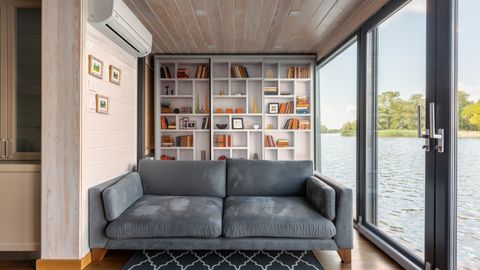
The ceiling is generally the largest single surface in a room and is almost universally painted white without a decision being made about it.
What the ceiling does
More than it appears.
It reflects a substantial proportion of the light in a room, which is why a white ceiling makes a room brighter and why a dark one changes the light quality entirely.
It sets the apparent height, which is the strongest determinant of how a room feels.
And it defines the top boundary of the room, which affects whether a space feels enclosed or open.
Making a low ceiling feel higher
The common problem.
Paint the ceiling a lighter shade than the walls, or the same colour, which removes the horizontal line where they meet.
Painting the ceiling in the wall colour is counterintuitive and works well, since the eye does not register a boundary.
Avoid a strongly contrasting ceiling, which draws a hard line and lowers the room.
Use vertical emphasis — tall curtains hung close to the ceiling rather than at the window head, tall furniture, vertical lines.
Keep pendant fittings shallow or use recessed or wall lighting.
Consider low furniture, which increases the visible space above it.
And avoid heavy cornicing, which consumes height.
Making a high ceiling feel comfortable
The opposite problem, and a real one.
Very high rooms can feel cold and unresolved.
The tools: a darker or warmer ceiling colour, which brings it down visually; a picture rail or a deep cornice, which introduces a horizontal division; pendant lighting hung low over specific areas; tall furniture and large art to occupy the upper volume; and colour blocking, where the wall colour continues onto the ceiling from a defined line, which lowers the apparent ceiling deliberately.
Colour
Where the default deserves questioning.
Brilliant white ceiling paint is a modern convention rather than a rule, and a very white ceiling against a coloured wall frequently looks harsh.
Tinting the ceiling with a small proportion of the wall colour softens the junction and is a standard decorator's approach.
A fully coloured ceiling — the so-called fifth wall — works well in small rooms, in bedrooms, and in rooms where a cosy effect is wanted, and is worth considering rather than dismissing.
Dark ceilings in small dark rooms produce a deliberate enveloping quality, and they do reduce reflected light, which must be compensated for with more lamps.
Finish
Which matters practically.
Matt is standard for ceilings, since it hides imperfections and old plaster is rarely flat.
Any sheen on a ceiling reveals every undulation, particularly with light raking across from a window.
In bathrooms and kitchens, a moisture-resistant matt is the right compromise, since ordinary emulsion suffers in humidity.
Painting a ceiling
Practical points, since it is the least pleasant decorating job.
Clear and cover the room entirely, since ceiling painting drips everywhere.
Use an extension pole rather than a ladder, which is faster, safer and produces a better finish.
Cut in the edges first with a brush, then roll.
Roll in one direction, and keep a wet edge, working in manageable sections.
Two thin coats rather than one thick.
And treat any stains with a stain-blocking primer first, since water marks and nicotine bleed through ordinary emulsion regardless of how many coats are applied.
The things worth fixing
Common ceiling problems.
Cracks along the wall junction are generally movement and are best filled with flexible sealant rather than filler.
Cracks across a ceiling may be plaster shrinkage or may indicate movement, and a widening crack warrants professional assessment.
Stains indicate a leak, which must be traced and stopped before decorating.
Textured coatings applied in certain decades may contain asbestos, and should be tested rather than sanded or scraped.
And sagging plaster, particularly in older lath-and-plaster ceilings, is a safety matter rather than a cosmetic one.
General information only, not professional advice. Have textured coatings in older properties tested for asbestos before disturbing them, and consult a professional about structural cracks or sagging ceilings.
Also by Ines Cardoso
- Growing herbs properlyPlants & Garden
- Buying less in the first placeOrganising
- Choosing and arranging artDesign & Space
- Dust, allergens and indoor airCleaning & Care