Repairs & DIY
Fixing things instead of replacing them
A substantial proportion of discarded household items are repairable, and the obstacles are information and confidence rather than skill.
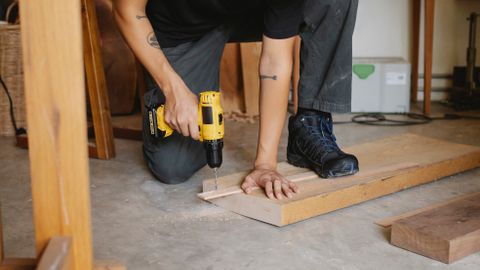
Household items are discarded at a rate that has risen substantially, and studies of what is thrown away consistently find that a large share is functional or easily repairable.
Why things get thrown away
Several reasons, most of which are not about the item being broken.
The fault is not diagnosed. An appliance that stops working is assumed to be beyond repair when the actual fault is frequently a single inexpensive component.
Repair is assumed to be expensive. Frequently true for a call-out and frequently not for a part fitted by the owner.
Spare parts are believed unavailable. Increasingly they are available, and legislation in several jurisdictions now requires manufacturers to supply them for defined periods.
Confidence. The largest factor, and the one that repair guides and community workshops address directly.
The common repairs worth attempting
Appliance faults that are frequently a single part: a washing machine that will not drain, generally a blocked filter or pump; a dishwasher that leaves things dirty, generally blocked spray arms or a clogged filter; a tumble dryer that takes too long, generally a blocked vent or lint filter.
These require no tools beyond a screwdriver and a bowl.
Loose furniture, which is generally screws that have worked loose or a joint that needs re-gluing.
A stripped screw hole in chipboard can be repaired with wood glue and a matchstick or a proprietary filler, which is a five-minute fix for something people generally discard.
Clothing, where a button, a seam or a small tear is straightforward and where a visible mend is now a legitimate aesthetic rather than a failure.
Dripping taps, generally a washer or a cartridge, which is a common first plumbing job.
Silicone sealant around baths and sinks, which is a maintenance task rather than a repair and which prevents substantial damage.
Electrical items with a broken cable or plug, which in many jurisdictions can be repaired by the owner, subject to local rules.
Where to get information
The obstacle that has largely disappeared.
Manufacturer service manuals are frequently available online.
Video demonstrations exist for almost every common fault on almost every common appliance, generally filmed by someone doing the exact repair.
Repair communities publish guides and part numbers.
And the model number on the appliance is the key to all of it, which is why finding and photographing it is the first step in any repair.
Repair cafés and community workshops
A growing network worth knowing about.
Volunteer-run sessions where people bring broken items and are helped to repair them, generally free.
These exist in a large number of towns and cities, and the reported repair success rate at such events is substantial.
The value is as much in learning as in the individual repair, since most people leave able to do it themselves next time.
The regulatory position
Which has moved.
Legislation in the European Union and in several other jurisdictions now requires manufacturers of certain appliance categories to make spare parts available for a defined period and to provide repair information to professional repairers.
Several jurisdictions have adopted or proposed broader requirements covering consumer access to parts and tools.
The direction is consistent, and it has already made parts more obtainable than they were.
When not to repair
Worth stating.
Where safety is involved and the repair is beyond your competence — gas appliances, mains electrical work beyond simple tasks, anything structural.
Where the item is genuinely inefficient and replacement would substantially reduce running costs, which for old refrigeration and heating equipment can be the case.
Where parts genuinely are unavailable.
And where the repair cost approaches the replacement cost for an item near the end of its life.
The habit worth building
Before discarding anything, spend ten minutes: find the model number, search for the symptom, and see what comes up.
A meaningful proportion of the time the answer is a part costing a few pounds and twenty minutes of work.
General information only, not professional advice. Electrical and gas appliances can be dangerous — isolate power before working on anything, and use a qualified professional for regulated work.
Also by Ines Cardoso
- Ceilings, and why nobody looks at themDesign & Space
- Growing herbs properlyPlants & Garden
- Buying less in the first placeOrganising
- Choosing and arranging artDesign & Space