Repairs & DIY
The tools worth owning
A short list covers the great majority of household repairs, and buying beyond it is generally wasted.
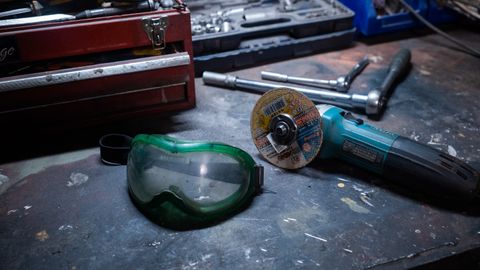
Most household repairs require a small number of tools, and the difference between having them and not is the difference between fixing something and living with it.
The essential dozen
A claw hammer, medium weight, which handles nails in both directions.
Screwdrivers, or better a driver with interchangeable bits covering slotted, cross-head and the square and star patterns that appear on modern fittings.
An adjustable spanner, which covers most plumbing and furniture fittings.
Pliers — a combination pair and a long-nosed pair.
A utility knife with replaceable blades.
A tape measure, five metres or more.
A spirit level, which need not be long for most household purposes.
A hand saw, general purpose.
An electric drill, cordless, with a set of drill bits for wood and masonry and a set of driver bits.
This is the single most transformative purchase for anyone doing anything around a house.
An electrical tester or socket tester, for checking whether something is live.
A torch, and a head torch if working in confined spaces.
Safety equipment — eye protection and work gloves, which cost very little and prevent the injuries that actually occur.
The consumables
Which matter as much as the tools.
An assortment of screws and wall fixings, since the fixing rather than the screw is what determines whether something stays up.
Wall plugs appropriate to your walls, which differ between masonry and plasterboard and where using the wrong one is the most common cause of failure.
Sandpaper in a few grades.
Wood filler and decorator's filler, which are different products.
Masking tape.
Adhesives: a general-purpose one, wood glue and a strong two-part epoxy.
Silicone sealant and a gun.
Penetrating oil, which frees seized fittings and is disproportionately useful.
What to buy later
Worth adding when a job requires it rather than in advance.
A stud detector, for finding what is behind plasterboard.
A multi-tool for cutting in awkward places.
A wallpaper stripper, a grout rake, a pipe cutter, a plunger and drain auger.
A stepladder, which for anything above head height is both safer and more effective than a chair.
Quality
Where it matters and where it does not.
Buy well: the drill, screwdrivers, the tape measure, the level, and anything with a cutting edge.
Poor screwdrivers damage screws, which turns a five-minute job into an hour.
Buy cheaply: anything used rarely, and anything where failure is inconvenient rather than dangerous.
Consider hiring for anything used once — floor sanders, tile cutters, breakers, scaffolding — which is far cheaper than buying and generally better equipment.
Many areas also have tool libraries and community workshops, which lend equipment for a membership fee.
Storage
Worth arranging, since tools that cannot be found are not owned.
A single box or bag for the core dozen, kept somewhere accessible rather than in a shed at the end of a garden.
Consumables sorted into labelled compartments, since the alternative is a drawer of mixed screws that nobody uses.
And the discipline of returning tools after use, which is the whole system.
The safety points
Brief and important.
Eye protection for anything that produces fragments, which includes drilling into masonry.
Isolate electrical circuits at the consumer unit before working on anything electrical, and test that it is dead.
Know where the water stopcock and the gas shut-off are before you need them.
Check for pipes and cables before drilling into walls, with a detector.
And know the limits: electrical and gas work is regulated in most jurisdictions, and some of it must be done by a qualified person by law.
Buying, borrowing and hiring
Not everything needs owning.
Tools used once or twice — a wallpaper steamer, a floor sander, a tile cutter, a scaffold tower — are cheaper to hire, and hired tools are generally better than the budget versions people buy.
Tool libraries operate in many towns and lend for a small membership, which is worth checking before buying anything substantial.
Borrowing from neighbours works and is worth reciprocating.
The tools worth owning outright are the ones reached for repeatedly: the screwdrivers, the drill, the hammer, the measuring tools and the knife.
Looking after them
Which determines whether a good tool lasts a lifetime or a season.
Keep them dry, since rust is what destroys hand tools in sheds and garages.
Clean after use, particularly anything used with paint, adhesive or filler.
Sharpen what needs sharpening, since a blunt chisel or blade is more dangerous than a sharp one.
Store so that edges are protected and everything is visible.
And check power tool cables and batteries periodically, since damaged leads are a genuine hazard.
General information only, not professional advice. Electrical, gas and structural work is regulated and can be dangerous — consult a qualified professional and follow local regulations.
Also by Ben Akerlund
- Outdoor space, however smallDesign & Space
- Laundry problems and how to solve themCleaning & Care
- When to call a professionalRepairs & DIY
- Rugs, and the mistakes people make with themDesign & Space