Design & Space
Rugs, and the mistakes people make with them
Almost every rug in almost every home is too small, and the effect is more damaging than having none.
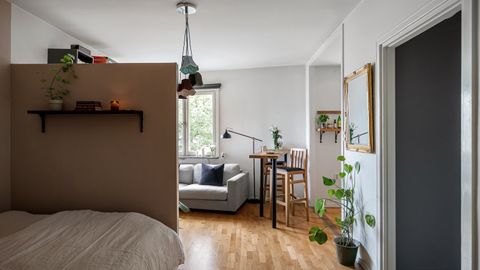
A rug does more work than its cost suggests — it defines a zone, absorbs sound, adds warmth and texture, and holds a furniture arrangement together — and it does none of that if it is the wrong size.
The size problem
The most common error by a wide margin.
A small rug floating in the middle of a seating area makes the room feel smaller and the arrangement feel unresolved, because it reads as an object on the floor rather than as a defined zone.
The rules that work:
In a living room, either all furniture legs on the rug, or at minimum the front legs of every seat on it.
The rug should be at least as wide as the sofa and preferably wider.
A rug that touches nothing is too small.
Under a dining table, the rug must extend far enough beyond the table that chairs remain on it when pulled out — roughly 60 to 75 centimetres past each edge.
A chair with two legs on and two off is both irritating and damaging to the rug.
In a bedroom, either a large rug extending well past the bed on three sides, or runners along the sides, positioned so bare feet land on them.
In a hall, a runner leaving an even margin of floor on each side, and stopping short of doors.
When choosing between two sizes, take the larger one.
Materials
Which determine durability and feel.
Wool is the standard for good reason — durable, naturally soil-resistant, resilient under furniture, warm, and it ages well.
It sheds initially, which stops.
It is expensive and worth it in a room used daily.
Cotton is cheaper, washable in smaller sizes, and less durable.
Good for kitchens and children's rooms.
Jute, sisal and seagrass are hard-wearing, textural and inexpensive, and are rough underfoot and difficult to clean when stained.
Good under a dining table or in a hall, less good where people sit on the floor.
Synthetics — polypropylene in particular — are cheap, stain-resistant and easily cleaned, and flatten over time and feel like what they are.
Genuinely useful in high-traffic and outdoor spaces.
Viscose looks like silk and is damaged permanently by water, which makes it a poor choice almost anywhere in a home.
Construction
Worth understanding, since it drives price and longevity.
Hand-knotted rugs are the most durable and expensive, and can last generations.
Hand-tufted rugs are made faster with a latex backing, which eventually deteriorates and sheds.
Machine-made rugs vary widely in quality and are the majority of what is sold.
Flatweaves have no pile, are reversible, are easy to clean and offer less cushioning.
Underlay
Which is skipped and should not be.
It stops the rug moving, which is a genuine trip hazard on hard floors.
It adds cushioning, extends the rug's life by absorbing compression, and improves sound absorption.
The type matters: on hard floors, a natural rubber or felt underlay, and specifically not one that will react with a floor finish, since some backings and cheap underlays discolour wood and vinyl permanently.
Care
Practical points.
Vacuum regularly, which removes the grit that cuts fibres, and avoid a rotating brush on flatweaves, loops and delicate rugs.
Rotate periodically to even out wear and fading.
Blot spills immediately rather than rubbing.
Address indentations from furniture with damp and a light brushing, or with an ice cube left to melt.
Keep out of prolonged direct sun, which fades unevenly.
And have wool rugs professionally cleaned occasionally rather than saturating them at home, since drying is what causes the damage.
Layering
The technique that solves the cost problem.
A large inexpensive natural-fibre rug with a smaller, better rug on top gives the coverage that the room needs and puts the money where it is seen and felt.
It also allows a patterned or coloured piece to be used at a scale that would be overwhelming at full size, and it can be changed without replacing the whole floor covering.
Also by Ben Akerlund
- Outdoor space, however smallDesign & Space
- Laundry problems and how to solve themCleaning & Care
- When to call a professionalRepairs & DIY
- Growing from seedPlants & Garden