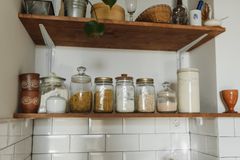
Kitchen
A kitchen that works
Kitchen layout follows a small number of principles, and most frustration comes from ignoring them rather than from lack of space.
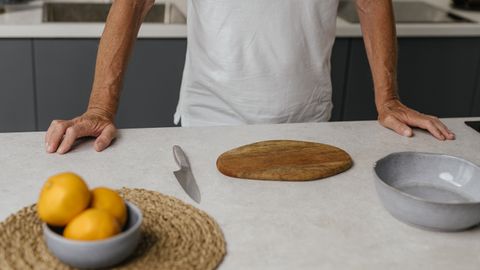
Kitchens are judged on appearance and used for work, and the difference between one that functions and one that does not is largely about arrangement.
The zones
The useful way of thinking about a kitchen is by activity rather than by furniture.
Storage — where food and equipment live.
Preparation — where things are washed, chopped and assembled.
Cooking — the hob and oven.
Serving — plates, and the route to the table.
Cleaning — sink, dishwasher, bins.
Each zone should have what it needs within reach, which is a different arrangement from the common one where all the equipment lives in one cupboard.
What goes where
The specific allocations that make the largest difference.
Knives, chopping boards and mixing bowls next to the preparation surface.
Pans, oils and cooking utensils beside the hob.
Plates and glasses near the dishwasher or the drainer, since that is where they are put away from.
Bins beside the preparation area, since that is where waste is generated.
Everyday food in an accessible cupboard; occasional ingredients higher or lower.
This costs nothing beyond an afternoon of moving things and is the single most effective kitchen improvement available.
The working triangle, qualified
The traditional principle — that sink, hob and refrigerator should form a compact triangle — remains broadly useful and is less applicable to modern kitchens.
It was developed for single-cook kitchens with a specific appliance set.
Contemporary kitchens with multiple users, islands and additional appliances are better analysed by zones as above.
The underlying point survives: the things used together should be near each other, and the routes between them should not be obstructed.
Worktop
The resource in shortest supply in most kitchens.
The practical requirement is a continuous clear run beside the hob and another beside the sink, each large enough to work on.
Which means the appliances and objects that colonise worktops — the toaster used weekly, the machine used monthly, the decorative items — are taking the most valuable space in the room.
Moving anything not used daily into a cupboard generally recovers more usable space than any amount of reorganisation.
Small kitchens
Where the principles matter most.
Vertical space: rails, hooks and shelves for things that would otherwise occupy worktop or cupboard.
The inside of cupboard doors, which is entirely wasted in most kitchens.
Nesting and multi-purpose equipment, since a small kitchen cannot support single-use items.
A folding or pull-out surface for additional preparation space.
And ruthlessness about equipment, since a small kitchen with too much in it functions worse than a small kitchen with less.
The equipment that earns its space
An opinionated list.
A large chef's knife, a small paring knife and a serrated knife, kept sharp.
A heavy pan that goes from hob to oven.
A large saucepan and a small one.
A baking tray and a roasting tin.
A colander, a sieve, a grater, a peeler, a wooden spoon, tongs and a spatula.
Two chopping boards, one for raw meat.
Scales, and a jug.
Almost everything else is optional, and most kitchens contain a great deal of equipment used once a year or never.
Sharpening
Worth its own note, since it changes cooking more than any purchase.
A blunt knife is both frustrating and more dangerous than a sharp one, because it requires force and slips.
A honing steel realigns the edge and should be used frequently; actual sharpening on a stone or with a sharpener is occasional.
Learning to do this, or having knives sharpened annually by someone who does, transforms preparation.
The maintenance that prevents problems
Cleaning the extractor filter, which becomes a fire risk when clogged with grease.
Clearing the sink trap periodically.
Checking the refrigerator seal, since a failed one wastes substantial energy.
Descaling the kettle in hard water areas.
And keeping the dishwasher filter clear, which is the cause of most poor-performance complaints.
General information only, not professional advice. Follow manufacturer instructions for appliances and consult a qualified professional for gas, electrical and plumbing work.
Also by Ines Cardoso
- Ceilings, and why nobody looks at themDesign & Space
- Growing herbs properlyPlants & Garden
- Buying less in the first placeOrganising
- Choosing and arranging artDesign & Space