Kitchen
Pots, pans and what they are for
Different materials behave differently on heat, and a small number of pans covers almost everything.
Cookware is sold in large matching sets, most of which contain pieces that are never used, and the useful collection is smaller and more deliberate than that.
The materials
Stainless steel is durable, non-reactive, dishwasher-safe and a poor conductor of heat, which is why good pans have an aluminium or copper core.
It browns food well and sticks unless heated properly and used with sufficient fat.
The technique: heat the pan, then add fat, then add food, and wait for the food to release rather than forcing it.
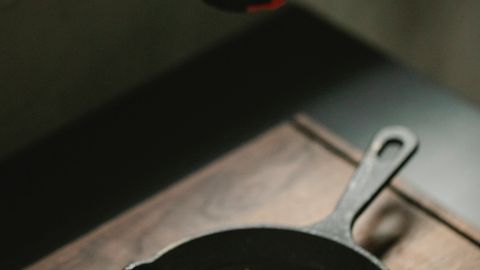
Cast iron retains heat exceptionally well, which makes it excellent for searing and for anything that goes from hob to oven.
It is heavy, slow to heat, and needs seasoning — a polymerised oil layer built by use — which makes it progressively more non-stick.
Enamelled cast iron removes the seasoning requirement and is excellent for slow cooking.
Non-stick is right for eggs, fish and pancakes and wrong for high-heat searing.
Coatings degrade with heat, metal utensils and abrasion, and non-stick pans are consumables with a life of a few years rather than permanent purchases.
Manufacturers advise against heating them empty or above stated temperatures.
Carbon steel behaves like a lighter, faster cast iron and seasons the same way — the traditional material for woks and for professional frying pans.
Copper conducts best and responds fastest, at high cost and with maintenance requirements.
Aluminium conducts well, is light, and reacts with acidic food unless anodised or coated.
What a kitchen actually needs
A workable collection.
A large heavy frying pan — cast iron or stainless — for searing and browning.
A non-stick frying pan for eggs and fish.
A large heavy casserole with a lid, for stews, braises, soups and bread.
A medium saucepan and a large one.
A stockpot or large pan for pasta.
A roasting tin that is genuinely heavy, since thin ones warp.
Two baking sheets.
That is close to complete, and it is fewer pieces than most sets contain.
Judging quality
What to look for.
Weight, which correlates with even heating and resistance to warping.
A thick base, ideally with a visible layered construction.
A handle that is riveted or welded rather than screwed, and that stays cool or is oven-safe as required.
A flat base, checked on a flat surface, which matters enormously on induction and ceramic hobs.
A well-fitting lid.
And compatibility with your hob, since induction requires a magnetic base — the test is whether a magnet sticks.
Care
Which determines how long they last.
Avoid thermal shock — no cold water into a hot pan, which warps bases and cracks enamel.
Avoid heating empty, particularly non-stick.
Match the pan to the ring, since a flame beyond the base wastes heat and damages handles.
Use appropriate utensils, particularly on non-stick.
Season cast iron and carbon steel by drying over heat and oiling lightly.
Restore stainless steel with a specialist cleaner rather than abrasion, which scratches.
And do not put cast iron, non-stick, aluminium or anything with a wooden handle in the dishwasher.
Discoloration and burnt-on food
Common questions.
Rainbow staining on stainless steel is harmless and removable with a mild acid.
White spots are mineral deposits from hard water, also removed by acid.
Burnt-on food responds to soaking, or to simmering water with a little bicarbonate, rather than to scouring.
And rust on cast iron is removable by scrubbing back and re-seasoning, which means a rusted pan found in a shed is generally salvageable.
Matching pans to the hob
Which affects performance more than most people realise.
Induction requires a ferrous base, and the pan should roughly match the ring size or the hob may not detect it.
Ceramic and halogen hobs require a genuinely flat base in full contact, since any warp or convexity dramatically reduces heat transfer.
Gas is the most forgiving of base shape, and the flame should stay under the base rather than licking up the sides, which wastes heat and destroys handles.
Solid electric plates respond slowly and suit heavy pans that hold heat.
A pan that performs badly is frequently a mismatch rather than a poor pan, and testing a base for flatness on a straight edge explains a great many disappointing results.
Also by Ines Cardoso
- Ceilings, and why nobody looks at themDesign & Space
- Growing herbs properlyPlants & Garden
- Buying less in the first placeOrganising
- Choosing and arranging artDesign & Space