Kitchen
Eating well on a small budget
The cheapest ingredients are frequently the best ones, and technique matters more than money.
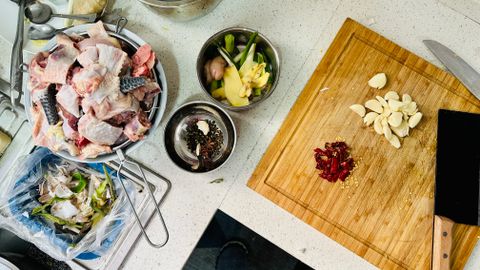
Food costs have risen substantially in most economies in recent years, and cooking well on limited money is a skill rather than a compromise.
Where the value is
Ingredients that deliver disproportionate nutrition and flavour for their cost.
Pulses — lentils, beans, chickpeas — which are among the cheapest sources of protein and fibre available and which are the foundation of a large proportion of the world's best cooking.
Dried are cheaper than tinned and require soaking and time; tinned are convenient and still inexpensive.
Eggs, which are a complete protein and which make a meal in minutes.
Root vegetables and brassicas, which are cheap, keep well and are nutritionally substantial.
Frozen vegetables, which are frozen at harvest and are frequently nutritionally superior to fresh produce that has travelled and sat.
Tinned fish, which provides protein and omega-3 fats at low cost.
Grains — rice, oats, barley, pasta — which are the cheapest calories available and which carry everything else.
Cheaper cuts of meat — shoulder, shin, thigh, belly — which have more flavour than expensive cuts and which need time rather than money.
Whole chickens, which are cheaper per kilogram than portions and which produce stock afterwards.
The techniques that stretch food
Slow cooking, which converts tough cheap cuts into something better than a quick expensive one.
Bulking with pulses and grains, which reduces the quantity of the expensive ingredient without reducing the meal.
Half the mince and a tin of lentils produces a better result than mince alone, not merely a cheaper one.
Making stock from bones and vegetable trimmings, which costs nothing and improves everything.
Using the whole ingredient — broccoli stalks, herb stems, chard stems, cauliflower leaves — most of which are perfectly good and routinely discarded.
Cooking once and eating twice, which is discussed elsewhere on this site.
Building flavour cheaply — browning properly, using aromatics, adding acid at the end, using salt correctly.
These cost nothing and account for most of the difference between dull food and good food.
Where money is wasted
The largest leaks.
Food thrown away, which in many households is a substantial proportion of what is bought and which is addressed by planning and storage.
Prepared and portioned foods, which carry a large premium for work that takes minutes.
Small packs, where the unit price is frequently much higher.
Branded staples where own-brand is functionally identical.
Convenience purchases made because there was nothing in the house, which is what the store cupboard exists to prevent.
And drinks and snacks, which are individually small and cumulatively substantial.
Cooking cost
Which matters where energy is expensive.
Lids on pans, which reduce cooking time and energy substantially.
Matching the pan to the ring.
Using the smallest appropriate appliance — a microwave, air fryer or slow cooker uses considerably less energy than a full oven for a small quantity.
Filling the oven when it is on.
Boiling only the water needed.
And batch cooking, which uses one heating cycle for several meals.
Eating well rather than merely cheaply
The distinction that matters.
A diet built on pulses, grains, vegetables, eggs and modest amounts of meat and fish is inexpensive and aligns closely with what nutritional guidance actually recommends.
The expensive diet is not the healthy one — it is the processed and convenience one.
Which means that cooking from basic ingredients tends to improve both cost and nutrition simultaneously, provided the cooking is competent enough that the food is enjoyable.
That last condition is the real one, and it is a matter of practice rather than expenditure.
The freezer as a financial tool
Which is how it is best understood in a tight budget.
It allows buying reduced items without needing to eat them immediately, which converts a short-dated bargain into a planned meal.
It allows buying in larger, cheaper units and portioning them.
It allows cooking once for several meals, which reduces both energy and the risk of a bought meal on a bad evening.
And it converts leftovers from something that will be thrown away into something that will be eaten.
Portioning, labelling and dating are what make the difference between a freezer that saves money and one that stores food indefinitely until it is discarded.
General information only, not nutritional or medical advice. Consult a qualified professional about your own dietary requirements.
Also by Rosalind Mayer
- Finishing a room, and knowing when to stopDesign & Space
- Making a home work for how you actually liveDesign & Space
- Bread, and why it is worth makingKitchen
- Storage that is part of the roomDesign & Space