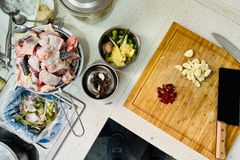
Kitchen
Cooking without recipes
A small number of structures underlie most everyday dishes, and learning them replaces most recipe use.
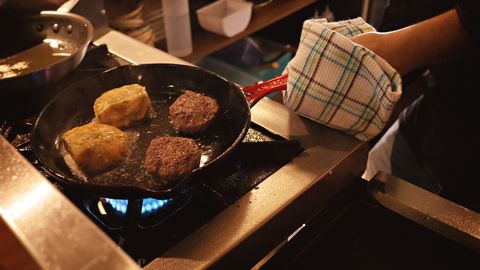
Cooking from recipes every night is slow, requires specific shopping, and produces waste. Cooking from structures does not.
The structures
Most everyday dishes are one of a small number of shapes.
Something fried or roasted, plus a starch, plus a vegetable. The simplest and most common.
A soup or stew: aromatics softened, main ingredients added, liquid, simmered, seasoned.
A grain or pasta dish: the starch cooked, combined with something flavourful and something fresh.
A salad or bowl: a base, a protein, something crunchy, something soft, a dressing.
Eggs: which cover an entire category of quick meals.
Something baked in one dish, where ingredients cook together in the oven.
Knowing these means looking at what is in the house and choosing a shape rather than searching for a recipe that matches the ingredients.
The flavour framework
What makes food taste finished.
Salt, added throughout rather than at the end, which seasons the food rather than coating it.
Under-seasoning is the most common domestic cooking fault by a wide margin.
Acid — lemon, vinegar, tomato, yoghurt — which lifts everything and which most home cooking lacks.
A dish that tastes flat despite adequate salt generally needs acid.
Fat, which carries flavour and provides texture.
Heat, in the sense of chilli or pepper, which is optional and adds interest.
Sweetness, in small amounts, which balances acid and bitterness.
Umami — from cheese, anchovy, mushrooms, soy, tomato paste, stock — which adds depth.
Tasting and asking which of these is missing is the entire technique.
The techniques worth understanding
Browning. Meat, vegetables and aromatics browned before liquid is added produce a fundamentally different result from those simmered from raw.
This requires a hot pan, sufficient fat, not overcrowding, and patience.
Building a base. Onion, and whatever else — garlic, carrot, celery, pepper, ginger — softened slowly at the start.
Nearly every savoury dish in most cuisines begins this way.
Deglazing. Adding liquid to a pan with browned residue and scraping it up, which recovers a great deal of flavour that would otherwise be washed away.
Resting meat after cooking, which allows juices to redistribute.
Reducing, which concentrates flavour and thickens without adding anything.
Finishing, which is the step most home cooking omits: something fresh, something acidic, something textural added at the end.
The store cupboard that enables it
What makes improvised cooking possible.
Oil, and a better oil for finishing.
Vinegar of a couple of types, and lemons.
Salt, pepper, and a small set of spices actually used.
Dried pasta, rice and one or two other grains.
Tinned tomatoes, beans and fish.
Stock, or the means to make it.
Onions, garlic, and something in the freezer.
Soy sauce, mustard, and something fermented or preserved.
With these, almost anything fresh becomes a meal.
The habits that make it work
Taste continuously, which is what separates cooking from following instructions.
Prepare before starting, since a dish that requires chopping while something burns produces stress and worse food.
Cook more than needed where the dish keeps, which converts one effort into two meals.
Use the freezer for portions, stock and anything that would otherwise be wasted.
Keep a short list of dishes you can make without thinking, which is what actually gets cooked on a difficult evening.
Most competent home cooks have perhaps ten of these and rotate them, which is a more useful thing to build than a collection of recipes.
Tasting and adjusting
The habit that separates cooks from recipe followers.
Taste at every stage rather than at the end, since a problem caught early is correctable and one caught at the end frequently is not.
The four adjustments that fix most dishes: salt, which makes flavours legible rather than making food salty; acid, which lifts anything that tastes flat or heavy; fat, which carries flavour and softens harshness; and sweetness, which balances bitterness and acidity.
A dish that tastes dull is usually short of salt or acid.
A dish that tastes harsh usually needs fat or sweetness.
A dish that tastes thin usually needs reduction, browning or an umami ingredient rather than more of everything.
Heat
The other variable people underuse.
High heat browns and develops flavour; low heat softens and melds.
Most home cooking is done at a single medium heat throughout, which produces food that is neither browned nor properly tender, and simply using the two extremes deliberately improves a great deal.
Also by Ines Cardoso
- Ceilings, and why nobody looks at themDesign & Space
- Growing herbs properlyPlants & Garden
- Buying less in the first placeOrganising
- Choosing and arranging artDesign & Space