Cleaning & Care
Cleaning products and what you actually need
A handful of products covers nearly everything, and several common combinations are ineffective or dangerous.
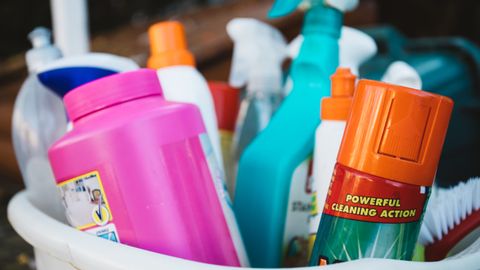
Most households own a dozen specialist cleaning products and use three, and several of the rest do nothing that a general cleaner does not.
What the categories actually do
Detergents and surfactants, which lift grease and dirt so it can be rinsed away.
This is what most general-purpose cleaners are, and it is what most cleaning actually requires.
Acids, which dissolve limescale, soap scum and mineral deposits.
Vinegar and citric acid are the mild ones; descalers and some bathroom cleaners are stronger.
Alkalis, which cut heavy grease and are what oven cleaners and some degreasers rely on.
Bleaches and disinfectants, which kill microorganisms and remove stains.
These do not clean — they disinfect, and a surface must be cleaned first for them to work.
Abrasives, which remove material physically.
The short list
What covers nearly everything.
A general-purpose detergent, diluted, for most surfaces.
White vinegar or a citric acid solution for limescale, glass and bathroom deposits.
Bicarbonate of soda as a mild abrasive and deodoriser.
A cream cleaner for stubborn marks on hard surfaces.
A bleach-based product for sanitising where genuinely needed.
Washing-up liquid, which is a perfectly good general cleaner for many purposes.
Microfibre cloths, which clean effectively with water alone for many tasks and reduce product use substantially.
The combinations to avoid
Where household chemistry becomes genuinely dangerous.
Bleach and acid, including vinegar and many limescale removers, which releases chlorine gas.
This is a real hazard that causes hospital admissions annually.
Bleach and ammonia, including some glass cleaners, which produces chloramine vapours.
Different drain cleaners, which can react violently.
The general rule: use one product at a time, rinse between products, and never mix anything with bleach.
Ventilate when using anything strong, and wear gloves.
What does not work as well as claimed
Vinegar as a disinfectant. It has some antimicrobial effect and is not a substitute for a disinfectant where one is genuinely needed.
It is excellent for limescale and glass and should not be used on natural stone, which it etches.
Bicarbonate and vinegar together, which is a popular combination that neutralises both into salty water and produces a satisfying fizz that does very little.
Each is useful separately.
Antibacterial everything. Routine surfaces in a domestic kitchen generally require cleaning rather than disinfection, and public health guidance targets disinfection at specific situations — after handling raw meat, during illness, and on high-touch surfaces.
Specialist products for every surface, most of which are the same detergent at different dilutions with different fragrances.
Method matters more than product
Several principles that improve results with any product.
Contact time. Most products need to sit for a period, stated on the label, and are wiped off immediately.
Top to bottom, so that dirt falls onto surfaces not yet cleaned.
Dry to wet — remove loose dust before applying liquid, otherwise it becomes mud.
The right dilution, since more product does not clean better and leaves residue that attracts dirt.
Rinse and dry, which is what prevents the streaking and film that people blame on the product.
The surfaces that need care
Natural stone, which acid damages.
Wood, which prolonged water damages.
Painted and lacquered surfaces, which abrasives and strong alkalis damage.
Screens and coated glass, which need water or a dedicated product rather than general cleaners.
And anything with a manufacturer's instruction, which is worth reading once.
Reading the label
Which is more informative than the marketing on the front.
The active ingredients tell you what the product actually is, and a great many differently branded products contain the same few chemicals at similar concentrations.
Contact time matters and is stated: disinfectants generally need to remain wet on a surface for a stated period to work, and wiping immediately means they have not.
Dilution instructions matter in both directions, since stronger is not better and undiluted product leaves residue that attracts soil.
The safety points
Brief and important.
Never mix products, and in particular never mix anything containing bleach with anything acidic or with ammonia, which produces toxic gas.
This is the most common serious domestic cleaning injury and it happens when people combine products hoping for a stronger effect.
Ventilate when using anything strong.
Keep products in original containers with labels, particularly where there are children.
And store them away from food and out of reach.
General information only, not safety advice. Never mix cleaning products, follow label instructions, and contact emergency services or a poisons information service if exposure occurs.
Also by Ines Cardoso
- Ceilings, and why nobody looks at themDesign & Space
- Growing herbs properlyPlants & Garden
- Buying less in the first placeOrganising
- Choosing and arranging artDesign & Space