Kitchen
Knives, boards and basic technique
A sharp knife and a stable board change cooking more than any appliance, and both are cheap.
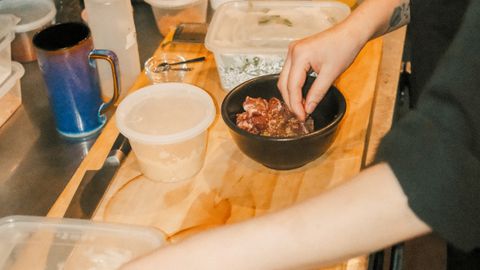
The two pieces of equipment used in almost every meal are a knife and a board, and both are generally in poor condition in domestic kitchens.
The knives worth having
Three cover nearly everything.
A chef's knife, eighteen to twenty-two centimetres, which does the great majority of the work.
A paring knife, small, for anything requiring control in the hand.
A serrated knife, for bread and for anything with a tough skin and soft interior, such as tomatoes.
Beyond these, a boning or filleting knife if you break down meat and fish, and nothing else is necessary.
Knife blocks with a dozen knives are largely decoration, and the additional knives are generally unused.
Choosing one
What matters.
How it feels in your hand, which is the primary consideration and which means handling one before buying where possible.
Balance, which should feel neither handle-heavy nor blade-heavy.
Steel: harder steels hold an edge longer and are more brittle; softer steels dull faster and are easier to sharpen and more forgiving.
Full tang — where the steel extends through the handle — is generally more durable.
Price beyond a moderate level buys refinement rather than function, and a mid-priced knife kept sharp outperforms an expensive one that is not.
Sharpening
The single change that most improves cooking, and the one people most avoid.
Honing with a steel realigns an edge that has bent and should be done frequently — before or after each substantial use.
It does not remove metal and does not sharpen a genuinely blunt knife.
Sharpening removes metal to create a new edge, and is needed periodically depending on use.
Options: a whetstone, which gives the best result and requires learning; a pull-through sharpener, which is convenient and removes more metal than necessary; or a professional service, which many hardware shops and some markets offer.
Any of these is better than the common alternative, which is using a blunt knife for years.
A blunt knife is more dangerous than a sharp one, since it requires force and slips off surfaces rather than cutting into them.
Looking after them
Practical rules.
Hand wash and dry immediately. Dishwashers damage edges through contact with other items and damage handles through heat.
Do not leave knives in a sink, which is both a safety hazard and damaging.
Store on a magnetic strip, in a block, or with edge guards, rather than loose in a drawer where the edge contacts everything else.
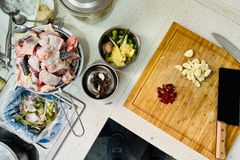
Use a wooden or plastic board rather than glass, stone or steel, which blunt an edge immediately.
Boards
Where the choice matters for both function and safety.
Wood is kind to edges, has some natural antimicrobial properties, and requires occasional oiling and hand washing.
Plastic is dishwasher-safe and develops grooves that harbour bacteria as it ages, which means replacing it when heavily scored.
Glass and stone look attractive and destroy knives.
Separate boards for raw meat and for everything else is the standard food safety recommendation and is worth following.
A damp cloth under a board prevents it sliding, which is the most common cause of kitchen cuts.
Technique
The few points that make the largest difference.
The grip: pinch the blade between thumb and forefinger just ahead of the handle, with the remaining fingers around the handle.
This gives control that gripping the handle alone does not.
The other hand forms a claw, fingertips tucked under, knuckles guiding the blade.
This is the technique that prevents cut fingertips, and it feels awkward for about a week.
The motion is forward and down, with the tip of the blade remaining in contact with the board, rather than chopping vertically.
Create a flat surface on anything round before cutting it, so it cannot roll.
Let the knife do the work, which is possible only if it is sharp.
If you cut yourself
Brief and practical.
Apply pressure with a clean cloth and elevate.
Most kitchen cuts stop bleeding within a few minutes with pressure.
Seek medical attention for anything deep, anything that will not stop bleeding, anything affecting sensation or movement, and any wound where a fragment may remain.
General information only, not medical advice. Seek medical attention for significant wounds and follow food safety guidance on cross-contamination.
Also by Rosalind Mayer
- Finishing a room, and knowing when to stopDesign & Space
- Making a home work for how you actually liveDesign & Space
- Bread, and why it is worth makingKitchen
- Storage that is part of the roomDesign & Space