Kitchen
The store cupboard
A well-stocked cupboard means being able to cook without shopping, which is worth more than any single ingredient.
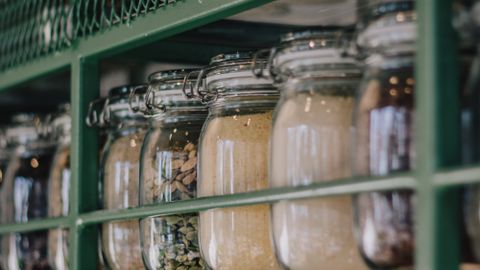
The difference between a household that cooks and one that orders food is frequently whether there is anything in the cupboard to cook with.
The foundations
What earns permanent space.
Oils: a neutral oil for cooking and a better olive oil for finishing.
Vinegars: a wine vinegar and one other — cider, sherry or rice, depending on what you cook.
Salt, both fine for cooking and flaky for finishing, and peppercorns with a grinder.
Onions and garlic, stored in a cool dark place with air circulation.
Dried pasta and noodles.
Rice, and one other grain — couscous, bulgur, barley or quinoa.
Tinned tomatoes, which are the foundation of an enormous number of dishes.
Tinned or dried pulses — chickpeas, lentils, beans.
Tinned fish, which converts a store cupboard into a meal.
Stock, in whatever form you use.
Flour, and whatever else your baking requires.
The flavour builders
Which turn ingredients into dishes.
Soy sauce or tamari.
Mustard.
Tomato purée.
Anchovies, which dissolve into sauces and add depth without tasting of fish.
Something fermented — miso, gochujang, harissa, curry paste — depending on what you cook.
Honey or another sweetener.
Lemons, which are technically fresh and which belong on this list because so many dishes need them.
Parmesan or a similar hard cheese, which keeps for a long time and improves a great many things.
Spices
Where most cupboards contain too many, most of them old.
Ground spices lose their aroma within months; whole spices keep considerably longer.
Which argues for buying whole where practical and grinding as needed, and for buying small quantities of anything ground.
A workable core: cumin, coriander, paprika, chilli, cinnamon, black pepper, bay leaves and dried oregano or thyme.
Beyond that, buy for the cuisines you actually cook.
Buying spices from a specialist shop rather than a supermarket is generally cheaper and fresher.
The freezer as part of the cupboard
Which extends what is possible.
Frozen peas and other vegetables, which are frozen at harvest and are frequently better than tired fresh equivalents.
Frozen herbs.
Bread.
Stock.
Portions of previously cooked dishes.
Butter and grated cheese.
And whatever protein you use, portioned.
Storage
Practical points.
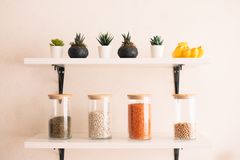
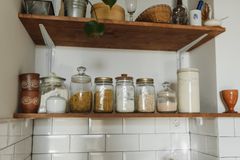
Airtight containers for anything opened, since packaging is generally not resealable and dried goods absorb moisture and attract pests.
Labelling with contents and date, since decanted goods lose their identity.
Cool, dark and dry, since heat and light degrade oils and spices particularly.
Oldest at the front.
And a visible arrangement, since anything at the back of a deep cupboard is functionally absent, which is discussed elsewhere on this site.
Pests
A note, since dried goods attract them.
Pantry moths and weevils generally arrive in packaging rather than infesting a clean cupboard.
Airtight containers contain any infestation to one item.
Where an infestation occurs, everything in the cupboard needs checking, affected items discarding, and the cupboard cleaning thoroughly including cracks and shelf edges.
Freezing new dried goods for a few days kills any eggs and is a reasonable precaution for anyone who has had a problem.
What a good cupboard makes possible
The point of all of this.
Pasta with garlic, oil, chilli and whatever cheese is available.
A tomato sauce from tinned tomatoes and a tin of anchovies or beans.
A lentil soup from stock, pulses and aromatics.
Fried rice from leftover rice, an egg and whatever vegetable exists.
A chickpea stew from a tin, tomatoes and spices.
None of these requires shopping, all of them take under half an hour, and having them available is what prevents the expensive alternative on a difficult evening.
What to buy first
Building a cupboard from nothing is expensive if done in one shop and painless if done gradually.
Start with the items used by almost everything: oil, salt, pepper, onions, garlic, tinned tomatoes, a grain, a pasta, stock and one acid.
Add one or two items each shop rather than all at once, chosen by what the week's cooking actually needed.
Buy small quantities of anything unfamiliar, since a large jar of something used once is the most common source of cupboard clutter.
And resist the specialist ingredient bought for a single recipe unless the cuisine is one you cook regularly, which is the single largest contributor to cupboards full of things nobody will finish.
Also by Ines Cardoso
- Ceilings, and why nobody looks at themDesign & Space
- Growing herbs properlyPlants & Garden
- Buying less in the first placeOrganising
- Choosing and arranging artDesign & Space