Organising
Children, toys and the volume problem
Toy accumulation follows a predictable pattern, and there is evidence that fewer toys produce better play.
Households with children accumulate toys faster than any other category, and there is reasonable evidence that the volume itself is a problem.
The research
A study examining toddlers playing with different numbers of toys found that children with fewer available played with each for longer and in more varied ways.
The interpretation offered was that a large number of options produces distraction rather than engagement.
The study was small, and the finding is consistent with what nurseries and early years practitioners report and with the general psychology of choice.
Which supports the practical approach that follows.
Rotation
The technique that addresses this without discarding anything.
A proportion of toys available; the rest stored out of sight and swapped periodically — every few weeks works for most families.
Returning toys are received as new, which extends their useful life considerably.
And the available set is small enough to be tidied in a few minutes, which is the practical benefit for the adults.
The items that should not rotate: whatever is currently being used intensively, comfort objects, and anything with an established role.
Managing the inflow
Where the volume actually comes from.
Gifts from relatives, which arrive in quantity at birthdays and holidays.
The conversation with grandparents and others is uncomfortable and generally welcomed: suggesting experiences, contributions to something larger, consumables, or a specific item rather than an open choice.
Party bags and free items, which arrive continuously and which can be dealt with at the door.
And purchases, which the same delay rule addresses as for anything else.
Storage that children can use
The requirement that determines whether tidying happens.
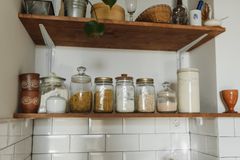
Open containers rather than lidded ones, since a lid is a step too many.
At the child's height.
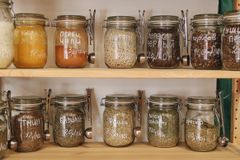
Sorted by type rather than mixed, with a picture label for pre-readers.
Not too many categories, since sorting into fifteen bins is beyond most young children and beyond most adults at the end of a day.
And a container that everything fits into, so that the space defines the limit rather than the floor.
Involving children in reducing
Which works better than doing it without them.
Doing it together, framed as choosing what to keep rather than what to lose.
Involving them in giving items to another child or to a charity, which most children respond to well when it is their decision.
Not doing it secretly, which children notice and which damages trust in a way that outlasts the toys.
And accepting that some items with no apparent value are genuinely important, which is not negotiable and is worth respecting.
What is actually played with
Worth observing before deciding what to keep.
Open-ended items — blocks, construction sets, art materials, dressing up, dolls and figures, balls — sustain play far longer than items with a single function.
Battery-operated toys that do the playing generally hold attention briefly.
Household objects frequently outperform toys entirely, which every parent has observed.
Which is a reasonable guide both to what to keep and to what to buy.
The books question
Treated separately, since books occupy a different position.
Access to books at home is associated with reading outcomes in a substantial literature, and books are generally worth keeping in greater quantity than toys.
Front-facing display of a small selection produces more reading than a full shelf of spines, which is how nurseries arrange them.
Rotation applies here too.
And the library removes the storage question entirely for anything not read repeatedly.
The realistic expectation
A household with children generates material continuously, and a permanently tidy one is not achievable during the years when children are small.
The achievable objective is that the volume is bounded, that most things have a place, and that clearing up takes ten minutes rather than an hour.
Letting children decide
Which works better than doing it while they are out, and which is the part adults find hardest to hold their nerve on.
Children who are consulted generally part with more than expected, and children who discover things have gone without their knowledge become markedly more possessive afterwards.
What helps: doing it when they are not tired, offering a container to fill rather than an open question, asking which things a younger child would enjoy rather than what should be thrown away, and accepting the answer even when it is the wrong one by adult judgement.
Keeping a small number of items that make no sense is a reasonable price for a child who participates rather than resists.
And the toys that survive several of these sessions are the ones genuinely worth the space, which is information worth having.
Also by Ines Cardoso
- Ceilings, and why nobody looks at themDesign & Space
- Growing herbs properlyPlants & Garden
- Buying less in the first placeOrganising
- Choosing and arranging artDesign & Space