Plants & Garden
Growing from seed
Seed is the cheapest way to fill a garden, and the failures happen at predictable points.
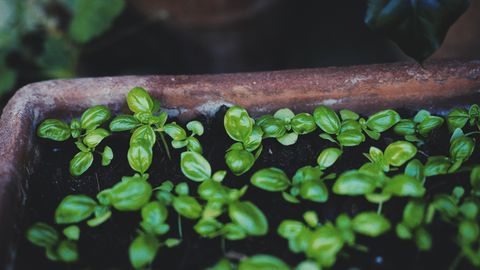
A packet of seed costs a fraction of a single plant and contains dozens, which makes it the largest available saving in gardening and the thing most people avoid.
What seeds need
Four things, and the failures are almost always one of them.
Moisture, consistently — not saturated, not allowed to dry out at any point.
A seed that begins germinating and then dries is dead.
Warmth, at the temperature that species requires, which varies considerably.
Many seeds germinate poorly below a threshold, and heat mats or a warm indoor spot make the difference.
Air, which means compost that is not compacted or waterlogged.
Light or darkness, depending on species — some need light to germinate and must be surface sown, others need covering.
The packet says which, and it is worth reading rather than assuming.
Sowing
Practical points.
Use seed compost, which is low in nutrients and fine in texture, rather than general purpose, which is too rich and too coarse.
Fill containers, firm gently, water before sowing rather than after, which avoids displacing the seed.
Sow at the depth stated, with the general rule being roughly twice the seed's diameter.
Sow thinly, which everyone finds difficult and which prevents the crowding that causes most seedling losses.
Label immediately, since seedlings are unidentifiable and memory is not reliable.
Cover to retain humidity until germination, and remove the cover once seedlings appear.
After germination
Where most losses occur.
Light. The most common failure is insufficient light, which produces pale, elongated, floppy seedlings that never recover.
A windowsill is frequently inadequate, particularly early in the year, and seedlings on one need turning daily.
Supplementary lighting resolves this.
Damping off, a fungal collapse at soil level that kills seedlings suddenly.
It is caused by overwatering, poor air movement, overcrowding and dirty containers, and it is prevented rather than cured.
Clean pots, sterile compost, thin sowing, careful watering and some air movement address it.
Pricking out into individual containers once the first true leaves appear, handling by the leaf rather than the stem, since a crushed stem is fatal and a damaged leaf is not.
Potting on as the plant fills its container.
Hardening off
The step most often skipped, and the one that kills the most plants.
Plants raised indoors have soft growth and no tolerance of wind, cold or direct sun.
Moving them straight outside kills or checks them severely.
The process is gradual over a week or two — outside during the day, in at night, increasing exposure — and a cold frame makes it straightforward.
Skipping it wastes months of work.
Direct sowing
For things that dislike disturbance — carrots, parsnips, beetroot, many annuals.
Which requires the soil to be warm enough, which is later than most people sow.
The traditional test of whether soil is warm enough is whether weeds are germinating in it.
Prepare a fine surface, sow in rows so seedlings can be distinguished from weeds, and thin ruthlessly, which is the step people cannot bring themselves to do and which determines the result.
Seed storage and viability
Worth knowing.
Seed keeps for varying periods by species — some for many years, some for one.
Cool, dark and dry storage extends viability substantially.
Old seed can be tested by germinating a sample on damp paper before committing a season to it.
And saving seed from your own plants works for open-pollinated varieties and does not for F1 hybrids, whose offspring do not come true.
What to grow first
For a reasonable first result.
Salad leaves, radishes, beans, courgettes, sunflowers, nasturtiums, sweet peas and most herbs germinate readily and grow quickly.
Starting with these builds the judgement that the more demanding species require, which is a better approach than beginning with something difficult and concluding that seed does not work.
What it costs and what it saves
Worth stating plainly.
A packet of seed generally costs about the same as a single small plant and contains anywhere from a dozen to several hundred seeds.
Which means the saving on a border of annuals or a vegetable bed is substantial, and the saving compounds where seed is saved from open-pollinated plants.
The costs are compost, containers, which can be reused for years, and time — largely the daily attention during the few weeks between germination and planting out.
Which is why seed suits people who are at home during that window and suits people who travel less well.
Sharing a sowing with a neighbour, splitting a packet and the resulting plants, resolves both the surplus and the attention problem.
Also by Ben Akerlund
- Outdoor space, however smallDesign & Space
- Laundry problems and how to solve themCleaning & Care
- When to call a professionalRepairs & DIY
- Rugs, and the mistakes people make with themDesign & Space