Repairs & DIY
Assembling and fixing flat-pack furniture
Flat-pack assembly has predictable failure points, and most wobbly furniture can be repaired rather than replaced.
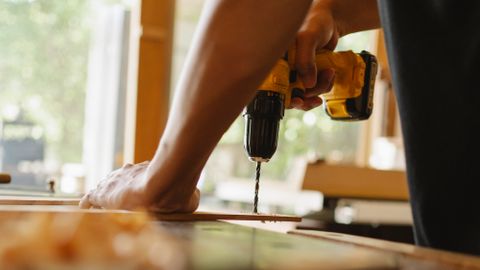
Flat-pack furniture is assembled badly more often than not, and the resulting instability is generally attributed to the product rather than to the assembly.
Before starting
The preparation that prevents most problems.
Clear a space larger than the finished item, with something soft on the floor to protect finished surfaces.
Open everything and check the contents against the list, since a missing part discovered halfway through means dismantling.
Sort the fixings into containers, since they look similar and the wrong one in the wrong hole is the most common error.
Read the instructions through once before beginning, which is unpopular advice and which prevents the step that has to be undone.
Identify which face of each panel is the front, since panels are frequently finished on one side only and reversed panels are the second most common error.
During assembly
The practices that produce a solid result.
Do not fully tighten anything until the structure is complete.
Leaving fixings slightly loose allows the piece to square up; tightening as you go locks in misalignment.
Check for square before final tightening, by measuring the diagonals, which should be equal.
Fit the back panel, which is what actually provides rigidity in most cabinets and which is frequently attached carelessly.
Nailing or screwing it at every fixing point, with the carcass square, is what prevents the racking that makes doors and drawers misalign.
Do not over-tighten, which strips the fixing in chipboard and destroys the joint.
Tighten until firm and stop.
Use a screwdriver rather than a drill for the final tightening, since power tools strip these fixings easily.
The common failures and their fixes
A stripped screw hole in chipboard.
Fill with wood glue and matchsticks or dowel, allow to set, and redrill.
Proprietary repair kits also exist. This is a permanent fix and takes minutes.
A cam lock that will not tighten, generally because the dowel is not fully seated or the cam is inserted the wrong way round.
The arrow on the cam should point toward the dowel.
Doors that do not align, which on most modern hinges can be adjusted in three directions with the screws on the hinge itself.
Most people do not know this is possible and live with misaligned doors for years.
Drawers that stick, generally because the runners are not parallel or the carcass is not square.
A wobbly item, generally because it is on an uneven floor or the back panel is inadequately fixed.
Making it last
Measures that extend the life considerably.
Retighten fixings after a few months, since they loosen as the material settles.
Fix tall items to the wall, which is essential rather than optional — furniture tipping onto children causes serious injuries and deaths annually, and most flat-pack items include a restraint that is frequently unused.
Avoid moving assembled items, since flat-pack construction is designed to be assembled once and dismantling weakens the joints substantially.
Where an item must be moved, empty it and carry rather than drag.
Protect surfaces from moisture, since chipboard and fibreboard swell irreversibly when wet.
The dismantling question
Worth knowing before moving house.
Some flat-pack furniture dismantles and reassembles acceptably once; most is significantly weaker afterwards.
Cam and dowel joints are the ones that survive least well, since the dowels are glued.
Which means the calculation before a move is whether the item is worth the transport and the weakened result, and frequently it is not.
The upgrade that costs little
For anyone keeping an item long term.
Replacing the supplied fixings with better ones, adding glue to dowel joints, and replacing a thin hardboard back with a thicker panel all substantially increase rigidity and life.
None is expensive, and the difference between a wobbling shelf unit and a solid one is generally these three things.
General information only, not professional advice. Anchor tall furniture to walls to prevent tip-over, particularly in homes with children.
Also by Ines Cardoso
- Ceilings, and why nobody looks at themDesign & Space
- Growing herbs properlyPlants & Garden
- Buying less in the first placeOrganising
- Choosing and arranging artDesign & Space