Organising
Living in a rented property
Making a rented home work involves changes that are reversible, and knowing which are permitted.
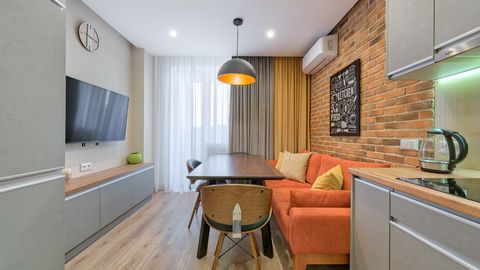
A substantial and growing proportion of households rent, frequently for years, and the assumption that a rented home is temporary produces homes that nobody has bothered with.
What is generally permitted
Varies by tenancy and worth checking rather than assuming.
Most tenancies permit ordinary use and prohibit alterations without consent.
In practice, the boundary is generally whether the change is reversible and whether the property is returned in its original condition.
Asking the landlord in writing is worth doing for anything substantial, since written permission removes the dispute later and landlords frequently agree to improvements they would not have made themselves.
The reversible changes that make the most difference
Lighting, which is discussed elsewhere on this site and which requires no alteration.
Lamps, better bulbs, and smart bulbs that dim without wiring changes.
Replacing a lampshade, keeping the original.
Textiles. Rugs over poor flooring, curtains over blinds, cushions and throws.
These change a room more than paint and travel with you.
Removable adhesive hooks and strips, which hold pictures, mirrors and hooks without holes, within their stated weight limits.
Freestanding storage rather than fitted.
Plants, which soften a space at low cost.
Peel-and-stick coverings for tiles, splashbacks and worktops, which are genuinely removable and which transform a dated kitchen or bathroom.
Testing on a small area first is worth doing, since some surfaces are damaged by adhesive.
Replacing handles on kitchen units and furniture, keeping the originals to refit.
A shower head, which is generally a straightforward swap and which improves daily life disproportionately.
Painting
Where permission matters.
Many tenancies prohibit it; many landlords will agree, particularly to neutral colours and where the work is done well.
Where agreed, obtaining the agreement in writing and noting the original colour is worth doing.
Where not agreed, the alternatives are textiles, art and removable coverings.
Dealing with problems
The practical position.
Report repairs in writing, keeping a record, since a verbal report is difficult to evidence later.
Landlords in most jurisdictions have statutory repair obligations covering the structure, heating, water, sanitation and electrical installations, regardless of what a tenancy says.
Damp and mould in particular have been the subject of recent legislative attention in several jurisdictions, and the position that it is caused by tenant behaviour is no longer generally accepted where a building defect or inadequate ventilation is the cause.
Where a landlord does not act, local authorities in many places have enforcement powers, and tenant advice organisations can explain the route.
Deposits
Where most disputes occur.
Photograph everything at the start, dated, including existing damage, and check the inventory in detail.
Keep a record of any reported repairs.
Understand what constitutes fair wear and tear, which is the distinction that determines deductions and which landlords and tenants interpret differently.
Clean thoroughly at the end, since cleaning is the most common deduction.
Photograph again at the end.
And know that deposits in many jurisdictions must be held in a protection scheme with an adjudication process, which is generally free and which tenants frequently do not use.
Making it feel permanent
The point that is easily missed.
Treating a home as temporary for several years means living in an unfinished space for a substantial part of a life.
Which is an argument for spending on things that travel — lamps, rugs, art, good storage, comfortable furniture — rather than nothing at all.
These move to the next property and improve every one afterwards, which makes them a better investment than they appear.
The things worth doing regardless
Practical items that apply to any tenancy.
Test the smoke and carbon monoxide alarms and report any that do not work.
Locate the stopcock, the consumer unit and the meters.
Take meter readings at the start and photograph them.
Obtain contents insurance, since a landlord's insurance does not cover tenants' possessions.
And keep a copy of the tenancy agreement somewhere accessible.
General information only, not legal advice. Tenancy law varies by jurisdiction — consult a tenant advice organisation or a qualified adviser about your own situation.
Also by Ines Cardoso
- Ceilings, and why nobody looks at themDesign & Space
- Growing herbs properlyPlants & Garden
- Buying less in the first placeOrganising
- Choosing and arranging artDesign & Space