Repairs & DIY
Painting a room properly
Preparation is most of the work, and the finish reflects exactly how much of it was skipped.
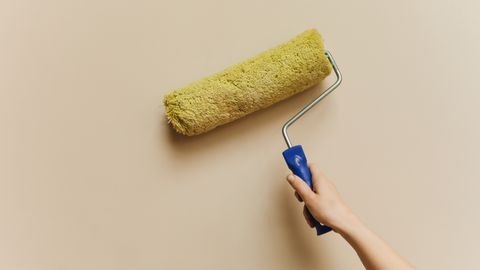
Painting is the most accessible home improvement and the one most frequently done badly, almost always for the same reason.
The preparation
Which accounts for most of the time and all of the difference.
Clear and cover. Remove what can be removed, move the rest to the centre and cover it.
Dust sheets rather than plastic on floors, since plastic is slippery and traps drips on the surface.
Clean the surfaces. Dust, grease and nicotine all prevent adhesion, and kitchens and bathrooms in particular need washing with a sugar soap solution and rinsing.
Fill and sand. Holes, cracks and dents filled, allowed to dry, and sanded flush.
Filler shrinks slightly, so deep holes need a second application.
Sand the whole surface lightly where the existing paint is glossy or in good condition, to give a key.
Remove dust after sanding, with a vacuum and then a damp cloth, since dust in the paint is the most common visible flaw.
Mask what you cannot cut in around, using decorator's tape applied firmly at the edge.
Removing tape while the paint is still slightly wet gives a cleaner line than waiting until it is fully dry.
Primer
Needed more often than people assume and not always.
Use it on bare plaster, bare wood, filler, over stains, over strong colours being covered with a much lighter one, and on any surface where adhesion is uncertain.
New plaster requires a mist coat — emulsion thinned with water — which soaks in and seals, since full-strength paint on new plaster does not adhere properly.
Over sound existing emulsion in a similar colour, primer is generally unnecessary.
Order of work
Consistent and worth following.
Ceiling first, then walls, then woodwork.
Which means drips fall onto surfaces not yet painted.
Within each: cut in the edges with a brush, then roll the main area while the cut-in paint is still wet, so the two blend rather than showing an edge.
Technique
Points that produce a visible difference.
Load the roller properly and remove the excess on the tray ridge, since an overloaded roller drips and an underloaded one leaves patchy coverage.
Work in sections of roughly a square metre, applying in a rough pattern then laying off in one direction with light strokes.
Maintain a wet edge, which means not letting the boundary of the painted area dry before the adjoining section is applied.
Stopping halfway across a wall produces a visible line.
Two coats, nearly always, with the drying time on the tin observed rather than guessed.
Do not overwork drying paint, which produces marks that cannot be removed without sanding.
Equipment
Where quality shows.
Brushes: a good one holds more paint, sheds fewer bristles and cuts a cleaner line. Synthetic for water-based paints, natural for oil-based.
Rollers: medium pile for most walls, short for smooth surfaces, long for textured.
A roller with a proper frame and an extension pole, which is faster and produces a better finish than working from a ladder.
And an angled brush for cutting in, which is considerably easier than a straight one.
The paint itself
Points worth knowing.
Coverage figures on the tin are optimistic and assume a smooth sealed surface.
Finishes differ in durability and in how they show imperfections: flat finishes hide flaws and mark easily; harder finishes are washable and show every defect.
Kitchen and bathroom paints contain additives to resist moisture and mould, which is worth using in those rooms.
And colours look different in a room from on a chart, which is why testing a patch and observing it at different times of day is worth the delay.
Cleaning up
Water-based paint: brushes and rollers wash out in water, and the washings should not go into a drain in large quantities.
Leftover paint: sealed, labelled with the room and the date, and stored somewhere frost-free.
Unwanted paint is generally accepted at household waste sites and by paint reuse schemes, and should not go in general waste as liquid.
General information only, not professional advice. Ventilate when painting, follow product safety instructions, and be aware that paint in properties built before the late twentieth century may contain lead — have it tested before sanding.
Also by Ines Cardoso
- Ceilings, and why nobody looks at themDesign & Space
- Growing herbs properlyPlants & Garden
- Buying less in the first placeOrganising
- Choosing and arranging artDesign & Space