Cleaning & Care
Caring for wood and other surfaces
Different materials require genuinely different treatment, and the wrong product causes damage that cannot be reversed.
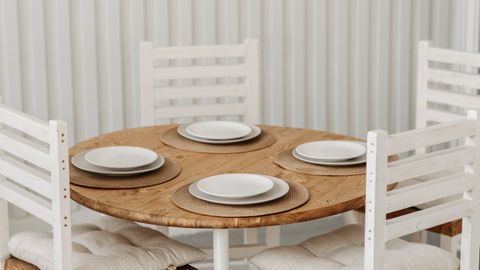
Household surfaces are frequently cleaned with whatever is at hand, which is why so many are damaged in ways that were entirely preventable.
Wood
Where the finish determines the treatment, as with floors.
Sealed or lacquered surfaces have a film on top. Clean with a barely damp cloth and dry immediately.
Avoid water in quantity, silicone-based polishes which build up, and anything abrasive.
Oiled surfaces have oil in the wood rather than on it. They need specific oil reapplied periodically and should not be cleaned with detergent, which strips it.
Waxed surfaces need wax rather than water.
Untreated wood, such as chopping boards and worktops, needs washing and drying immediately and periodic oiling with a food-safe oil.
The universal wood rules: wipe spills immediately, use coasters and mats, avoid direct heat, and keep out of prolonged direct sunlight, which fades and dries.
Stone
Where acid is the enemy.
Marble, limestone and travertine are calcium-based and are etched by acid — vinegar, lemon, wine, some fruit and many bathroom cleaners.
Etching is physical damage to the surface rather than a stain, and it is not removable by cleaning.
Which means pH-neutral cleaners only, and immediate wiping of anything acidic.
Granite is harder and more acid-resistant, and still benefits from neutral cleaning.
Most natural stone benefits from periodic sealing, which reduces staining, and the interval depends on use.
Engineered surfaces
Which behave differently from natural ones.
Quartz composites are non-porous and do not need sealing, and are damaged by heat and by strong chemicals.
Solid surface materials can be repaired by sanding, which is a genuine advantage, and scratch relatively easily.
Laminate is durable and is damaged permanently by water penetrating at joints and edges.
Metal
Stainless steel: wipe with the grain, since cleaning across it shows marks.
Avoid abrasives and chlorine bleach, which pit the surface despite the name.
Water marks in hard water areas are limescale and respond to a mild acid, carefully and rinsed off.
Cast iron: wash without detergent where possible, dry immediately over heat, and oil lightly, which maintains the seasoning.
Copper and brass: tarnish naturally, which some people prefer.
Where polishing is wanted, a proprietary product or a mild acid with salt works.
Aluminium: damaged by alkaline detergents, which is why aluminium pans discolour in dishwashers.
Upholstery and fabric
Where the cleaning code matters.
Many upholstered items carry a code indicating whether they may be cleaned with water, with solvent, with either, or by vacuuming only.
Using water on a solvent-only fabric causes marks that cannot be removed.
Vacuuming regularly is the main maintenance, since grit abrades fibres.
Rotating cushions distributes wear.
And keeping upholstery out of direct sunlight prevents the fading that is the most common form of deterioration.
Leather
Which needs cleaning and conditioning rather than either alone.
Dust regularly and wipe with a barely damp cloth.
Use a leather-specific cleaner rather than household products.
Condition periodically, since leather dries and cracks, particularly near heat sources.
Blot spills immediately and do not rub.
And note that different leather finishes — aniline, semi-aniline, pigmented — respond differently, with unfinished leathers absorbing everything and requiring the most care.
The general principles
Which cover most situations.
Identify the material before applying anything.
Test in a hidden area.
Use the mildest thing that works.
Wipe spills immediately, since almost everything is removable when fresh.
Use coasters, mats and pads, which prevent rather than cure.
And keep the manufacturer's care instructions, which for anything substantial are worth filing with the household paperwork discussed elsewhere on this site.
Painted and lacquered furniture
Which needs its own note, since it is treated as if it were solid wood and is not.
The finish is a thin film, and once it is worn through the substrate beneath is exposed — frequently a board product that absorbs water immediately.
Which means damp cloths only, dried at once, and no abrasives or solvent-based cleaners.
Chipped edges should be sealed rather than left, since moisture entering a board edge swells it permanently.
Touching up with a matched paint and sealing with a clear coat is straightforward and prevents a small chip becoming a delaminated corner.
Heat and light
The two agents that damage more surfaces than any cleaning product.
Keep hot items off any finished surface, use trivets and mats, and move furniture and textiles out of prolonged direct sun or accept the fading as a decision.
Also by Rosalind Mayer
- Finishing a room, and knowing when to stopDesign & Space
- Making a home work for how you actually liveDesign & Space
- Bread, and why it is worth makingKitchen
- Storage that is part of the roomDesign & Space