Cleaning & Care
Caring For Metal Fittings And Taps
Taps, handles and hinges lose their finish through abrasion and chemical attack, and most damage comes from the products used to clean them.
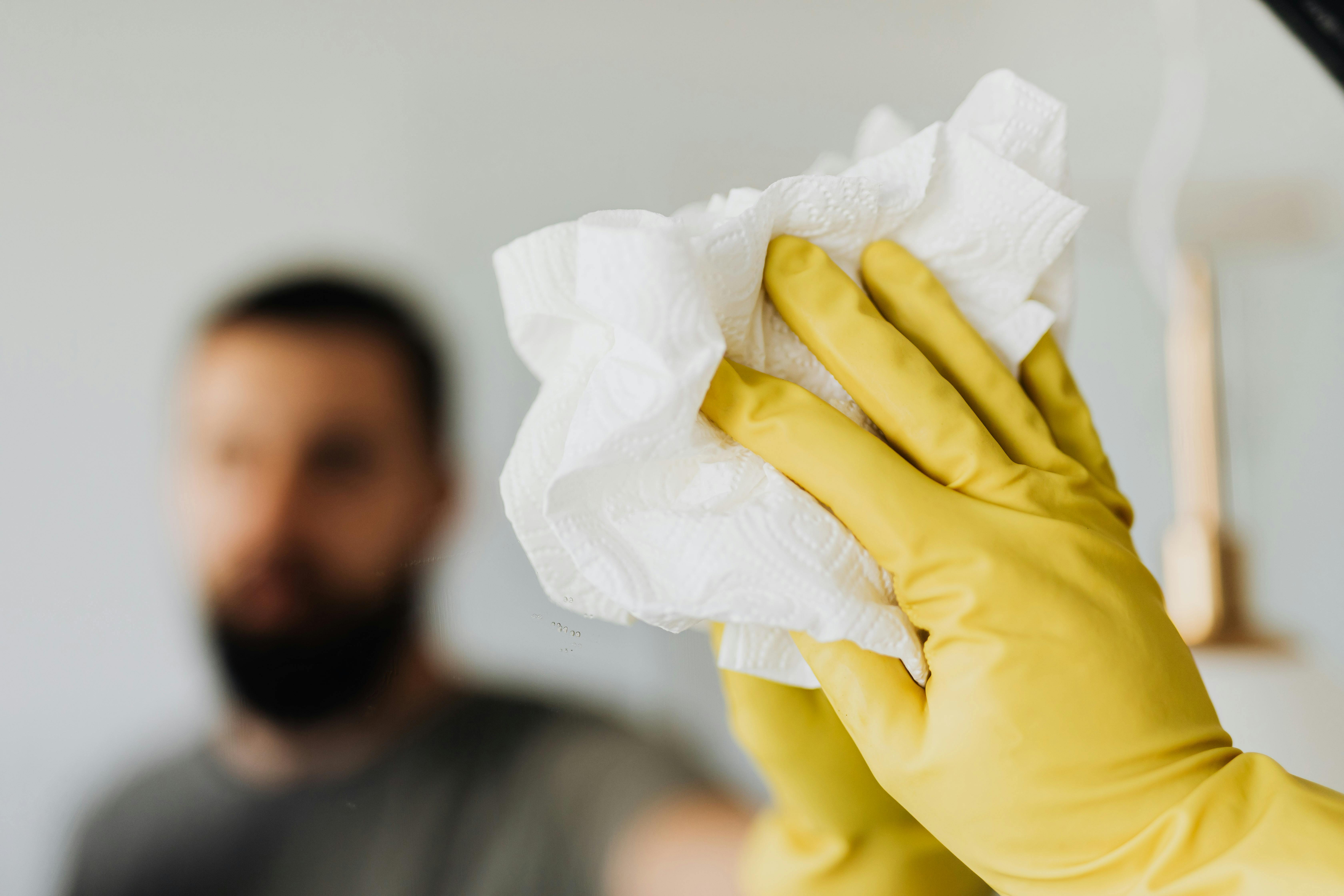
Metal fittings in a house are usually plated rather than solid, and the plating is thin. Nearly all the damage they suffer is inflicted during cleaning rather than during use.
Most fittings are a coating on a base
A typical tap is brass with a thin decorative layer applied over it, often chrome or a coloured finish, and sometimes a lacquer over that.
The layer is measured in fractions of a millimetre. Once it is worn or breached, the base metal beneath corrodes and the damage spreads outward under the surrounding plating.
This is why a small scratch becomes a growing patch, and why nothing restores a plated finish once it has gone through.
Abrasives remove the finish permanently
Cream cleaners, scouring pads and powders work by cutting the surface. On a hard tile that is acceptable, and on plating it is destructive.
The effect appears first as a loss of reflectivity, since fine scratches scatter light. A dulled tap has usually been polished with something too aggressive rather than tarnished.
Brushed and matt finishes hide this better but suffer the same way, and rubbing along the grain rather than across it at least keeps the damage consistent.
Acids and chlorine attack differently
Descalers are acidic and will etch some finishes, particularly gold-coloured, black and bronze coatings, if left in contact for more than a short time.
Chlorine-based cleaners attack stainless steel by breaking down the passive oxide layer that gives it corrosion resistance, which produces pitting that looks like rust.
Neither problem appears immediately. Both come from repeated brief exposure or from a product left to dwell while the person moves on to another task.
What routine care actually consists of
Warm water, a little washing-up liquid and a soft cloth removes almost everything that accumulates on a tap in ordinary use.
Drying afterwards does more than the cleaning did, because water spotting and scale are the visible problem in most households and both are prevented by removing the water.
For scale that has built up around a spout, wrapping the area with a cloth soaked in a mild acid for a limited period works without applying the product to the whole fitting.
Moving parts and the parts nobody cleans
Hinges, catches and window fittings wear through friction and grit rather than corrosion, and a small amount of the right lubricant extends their life considerably.
Aerators on taps unscrew and are usually full of grit and scale, which explains a weak or spraying flow far more often than a plumbing problem does.
Outdoor ironmongery needs a different approach again, since it faces moisture continuously, and the value there is in maintaining the protective coating rather than in cleaning the metal.
Also by Ines Cardoso
- Ceilings, and why nobody looks at themDesign & Space
- Growing herbs properlyPlants & Garden
- Buying less in the first placeOrganising
- Choosing and arranging artDesign & Space