Cleaning & Care
Cleaning Cloths, Sponges And Cross-Contamination
The cloth used to clean is often the dirtiest object in the kitchen, and how it is stored between uses matters more than how it is washed.
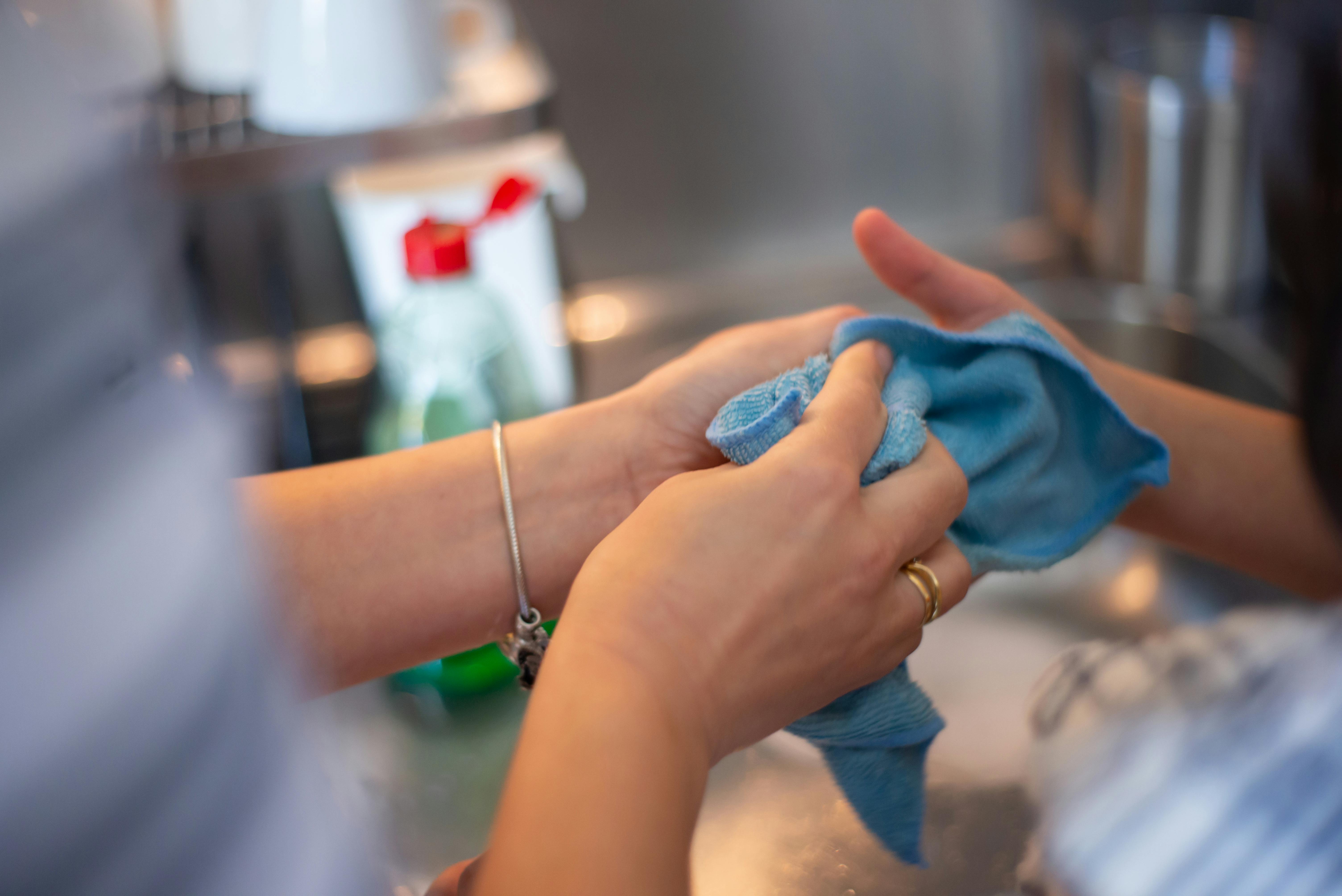
A cleaning cloth spends its life collecting food residue and then being left damp. That combination makes it the one item in a kitchen most capable of spreading what it picked up.
Why a damp cloth is a problem
Bacteria need moisture, warmth and something to feed on. A used dishcloth supplies all three continuously, and a folded one holds moisture for many hours.
The population inside a cloth can rise sharply overnight, which is why a cloth that seemed fine at bedtime is a different object by morning.
Wiping a worktop with it then distributes that population evenly across the surface, which is worse than not wiping at all in a small number of cases.
Sponges are harder to keep clean than cloths
A sponge is a large internal surface area holding trapped water and food particles in pores that rinsing does not reach.
Its structure means it never fully dries between uses in normal kitchen conditions, so the interior stays permanently favourable to growth.
Flat cloths dry far faster because they can be spread out, which is the main practical argument for using them instead.
Drying is the control that works
Rinsing removes food but leaves the cloth wet, so the useful step is wringing hard and hanging it open where air can reach both faces.
Draped over a tap or bunched in a sink corner defeats this entirely. The cloth needs to be spread, not merely out of the way.
Hot washing at laundry temperatures resets a cloth properly, and rotating several cloths through the wash is more effective than trying to sanitise one repeatedly.
Separating cloths by task
The main cross-contamination route in a domestic kitchen is a single cloth used on raw food surfaces and then on everything else.
Keeping separate cloths for worktops, for floors and for the areas where raw meat is handled removes that route without any change in technique.
Colour coding is the practical way to make this survive, because a distinction that relies on remembering which cloth was which fails within a day.
When to throw one away
A cloth that smells when dry has an established population that washing is no longer clearing, and the smell is the direct evidence of it.
Physical breakdown matters too. A frayed cloth sheds fibres and a compressed sponge no longer holds water where it is wanted, so both stop performing the mechanical job.
Treating cloths as consumables rather than equipment is cheaper than it feels, and it removes the temptation to persist with one that has already failed.
Also by Ines Cardoso
- Ceilings, and why nobody looks at themDesign & Space
- Growing herbs properlyPlants & Garden
- Buying less in the first placeOrganising
- Choosing and arranging artDesign & Space