Design & Space
Pattern, Texture And Where They Belong
Pattern and texture do different jobs in a room, and confusing the two produces spaces that are either restless or flat despite careful colour choices.
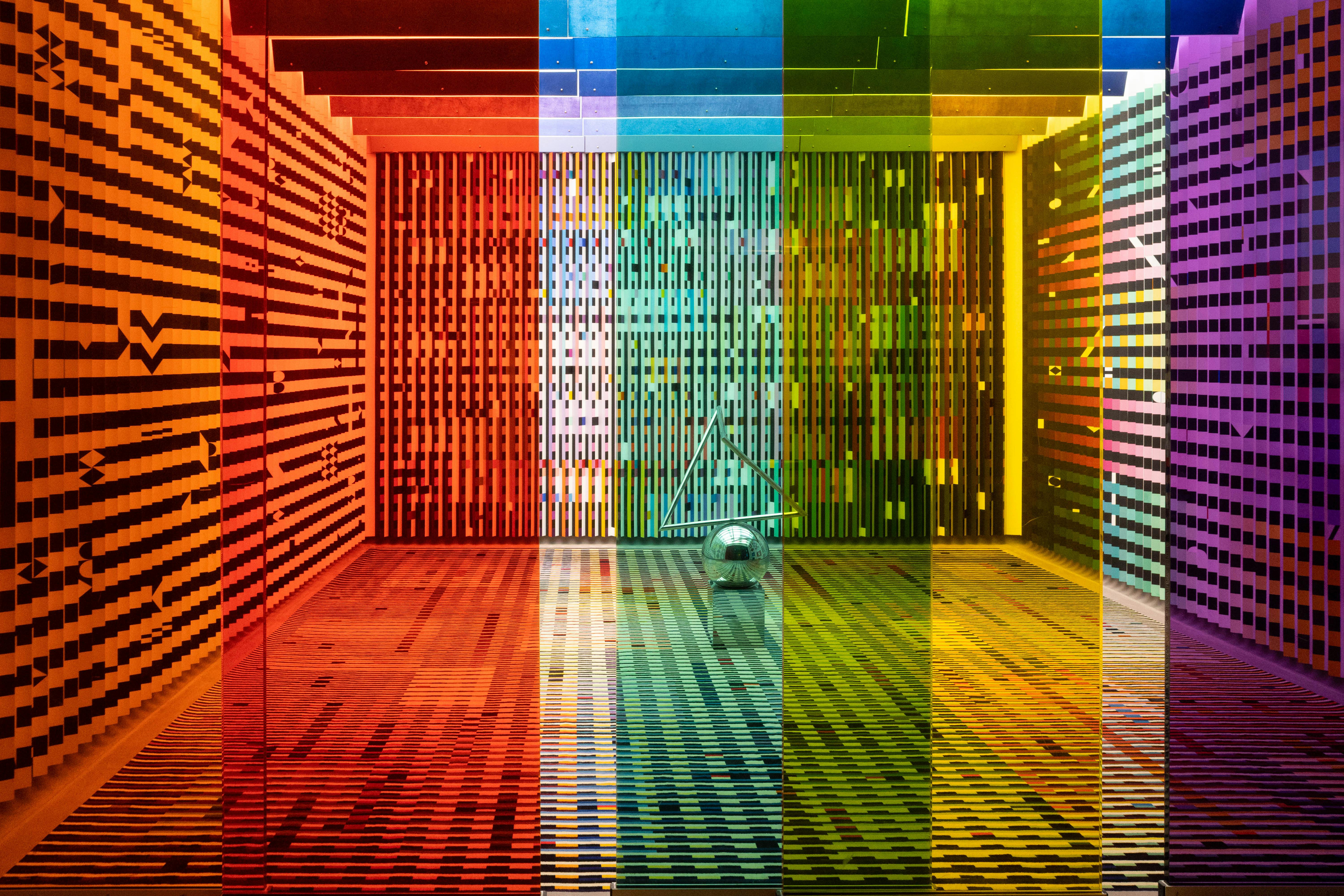
Rooms that are correct in colour can still feel unresolved. The missing element is usually texture, and the disruptive one is usually pattern in the wrong place.
Texture works below the level of attention
Texture is variation in surface: the difference between a matt plaster wall and a gloss one, between linen and leather, between rough stone and polished timber.
It affects how light behaves. Rough surfaces scatter light and read as soft, while smooth ones reflect it and read as crisp, which changes the character of a room without changing its colour.
A room of one texture feels flat regardless of how good the palette is, which is why entirely painted, entirely soft or entirely hard schemes rarely satisfy.
Pattern demands attention and competes
Pattern is a repeated motif the eye can read and follow, which makes it active in a way texture is not.
Two strong patterns in the same field of view compete unless something distinguishes them, and the usual distinguisher is scale rather than colour.
A large-scale pattern and a small-scale one coexist comfortably because the eye reads them as different layers. Two patterns of similar scale read as a conflict.
Where pattern earns its place
Pattern is most useful where there is a problem to solve: disguising wear, breaking up a large blank plane, or giving a plain room a focal point.
It works well in areas the eye passes through rather than dwells in, which is why hallways, cloakrooms and stair walls carry bold pattern better than a living room does.
On upholstery it hides a great deal, which is why patterned seating survives family use in a way plain pale fabric does not.
Scale relates to distance
A pattern viewed close, on a cushion or a small chair, reads as individual motifs. Viewed across a room it merges into an overall tone.
This means a large pattern in a small room is not automatically wrong, since it may be seen at a distance where it resolves rather than overwhelming.
The failure case is a pattern whose repeat is close to the size of the object it is applied to, because it reads as an incomplete fragment.
Building a room that has both
A workable approach is to establish the texture first and add pattern last, since texture is structural and pattern is an accent that can be adjusted cheaply.
Repeating a texture in two or three places ties a room together in a way that is felt rather than noticed, which is more durable than repeating a colour.
Where a room already contains strong natural pattern, in timber grain, brick or stone, that counts as pattern and reduces how much more the space can carry.
Also by Ines Cardoso
- Ceilings, and why nobody looks at themDesign & Space
- Growing herbs properlyPlants & Garden
- Buying less in the first placeOrganising
- Choosing and arranging artDesign & Space