Plants & Garden
Propagating Plants From Cuttings
A cutting has to survive without roots long enough to make them, so the whole technique is about limiting water loss and preventing rot.
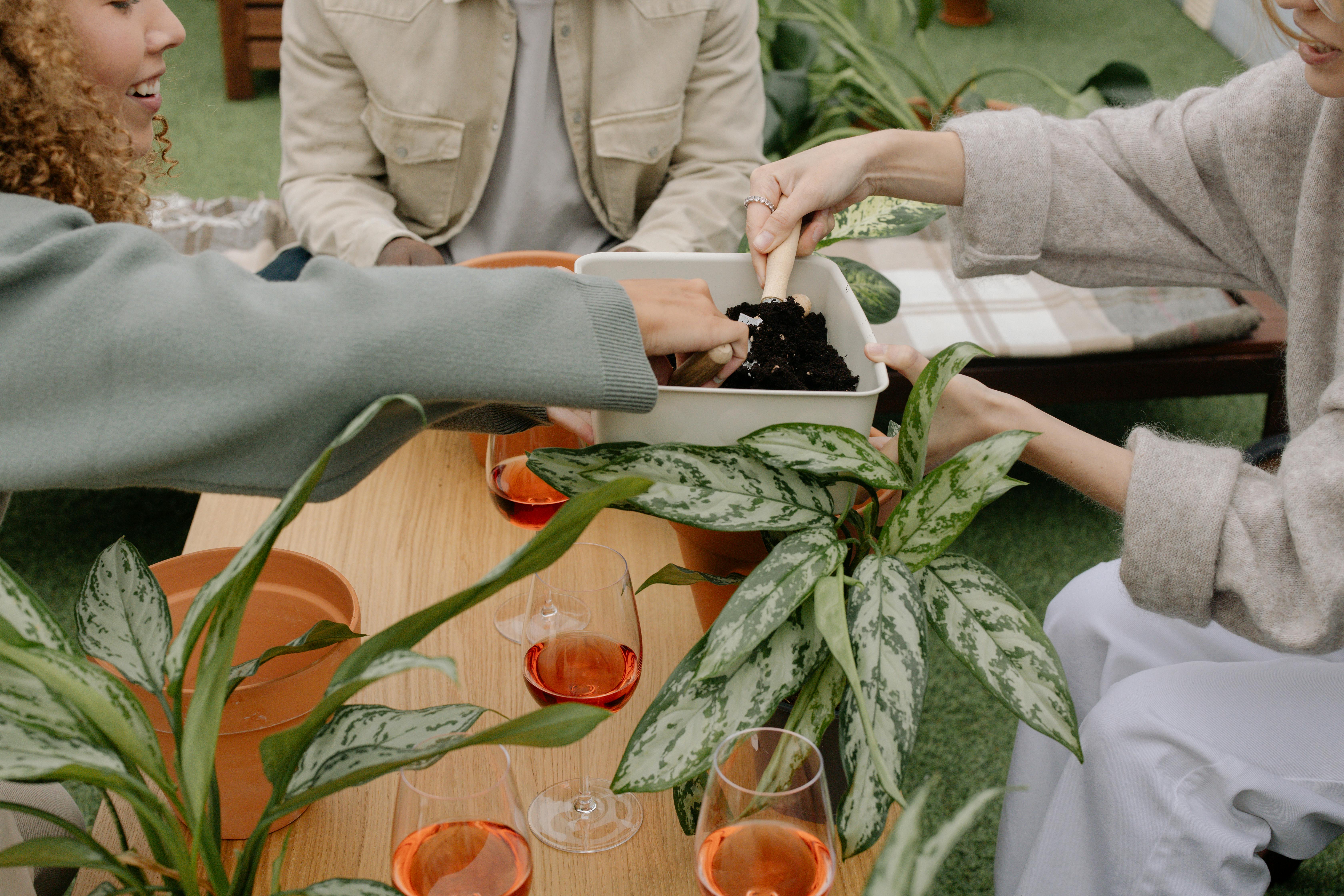
Taking cuttings looks like an act of faith and is a straightforward physiological problem. A severed shoot must stay alive without a root system for long enough to grow one.
The competing risks are drying and rotting
A cutting loses water through its leaves and cannot replace it, so the immediate threat is desiccation before roots form.
The countermeasure is high humidity around the foliage, which reduces the rate of loss and buys the weeks the cutting needs.
Humidity also favours fungal growth on cut surfaces and on any tissue in contact with wet compost, so the technique has to balance two opposing risks rather than maximise one.
Where and how the cut is made
Cuttings are usually taken just below a leaf node, because the concentration of cells capable of producing roots is highest there.
Removing the lower leaves prevents them rotting in the compost, and reducing the remaining leaf area cuts water loss while leaving enough surface to feed the process.
Clean, sharp cuts heal faster than crushed ones, which is why secateurs used for pruning are a poor choice compared with a blade.
The type of wood determines the season
Softwood cuttings are taken from new growth in spring, root fastest and are the most vulnerable to wilting because the tissue is soft and thin.
Semi-ripe cuttings from later in the season are firmer, tolerate handling better and root more slowly, which suits many shrubs.
Hardwood cuttings taken in dormancy are the most forgiving of neglect and the slowest of all, often taking a full season, and they suit many deciduous shrubs and fruit.
The medium is not compost in the usual sense
A rooting medium needs to hold moisture while remaining open and airy, because developing roots need oxygen and stagnant conditions kill them.
Nutrients are largely irrelevant at this stage, since a cutting without roots cannot take them up, and rich compost encourages the rot that is the main risk.
A gritty, low-nutrient mix therefore outperforms good potting compost, which is counterintuitive and is behind many failed attempts.
Aftercare and knowing when it has worked
Resistance when the cutting is gently tugged indicates roots have formed, and it is a better test than lifting it out to look.
Humidity has to be reduced gradually once rooting begins, because a plant moved straight from a covered environment into a room wilts immediately.
Not everything roots this way, and some plants are propagated from division, layering or seed instead, so a repeated failure often means the wrong method rather than poor technique.
Also by Ines Cardoso
- Ceilings, and why nobody looks at themDesign & Space
- Growing herbs properlyPlants & Garden
- Buying less in the first placeOrganising
- Choosing and arranging artDesign & Space