Kitchen
Stock, Scraps And What To Do With Them
Vegetable trimmings and bones carry gelatine and flavour compounds that water extracts, which is why stock is a process rather than a recipe.

Most of what a kitchen throws away still contains flavour. Stock is simply the process of extracting it into water, and understanding the extraction explains every rule about it.
What is actually being extracted
Bones and connective tissue contain collagen, which converts to gelatine in hot water over time. Gelatine gives stock its body and the coating quality that distinguishes it from flavoured water.
Vegetables contribute aromatic compounds and sugars, which dissolve much faster than collagen converts. This difference in timing is the reason for most stock technique.
Because the two work on different timescales, vegetables added at the start of a long bone stock are exhausted long before the bones have given up their gelatine.
Temperature decides the result
A stock held just below a simmer extracts steadily and stays clear, because the liquid is not agitated enough to break up the solids suspended in it.
A rolling boil emulsifies fat and fine particles into the liquid, which produces a cloudy, greasy stock that cannot be clarified easily afterwards.
This is the single technique that separates good stock from poor stock, and it costs nothing except the patience to keep the heat low.
What to keep and what to leave out
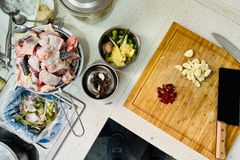
Onion skins, carrot tops, celery ends, leek greens, mushroom stalks and herb stems all give flavour and can be collected in the freezer until there is enough.
Brassicas and other strongly sulphurous vegetables dominate the result, and starchy trimmings such as potato peel cloud the liquid and can make it turn sour quickly.
Anything already spoiled contributes spoilage rather than flavour. Long cooking does not rescue a vegetable that had begun to break down before it went in.
Roasting changes the character
Bones and vegetables browned before they go in produce a darker, deeper stock, because roasting creates aromatic compounds that raw ingredients do not contain.
An unroasted stock is lighter and cleaner, which suits delicate soups and risottos where a dark stock would overwhelm everything else in the pan.
Neither is more correct, but they are not interchangeable, and a recipe that specifies one is usually relying on that difference.
Storing and using it
Cooling quickly matters, since a large volume of warm liquid spends hours in the temperature range where bacteria multiply if it is left in the pot on the hob.
Reducing stock before storage concentrates it and saves space, and the fat that sets on top of chilled stock seals it and can be lifted off cleanly.
Stock is unseasoned on purpose, because it will be reduced further in whatever it is used for, and salting it early produces a dish that cannot be corrected later.
Also by Ines Cardoso
- Ceilings, and why nobody looks at themDesign & Space
- Growing herbs properlyPlants & Garden
- Buying less in the first placeOrganising
- Choosing and arranging artDesign & Space