Repairs & DIY
Why Screws Strip And How To Avoid It
A rounded screw head is almost always caused by the driver lifting out of the recess under load, not by a soft screw or a worn tool.
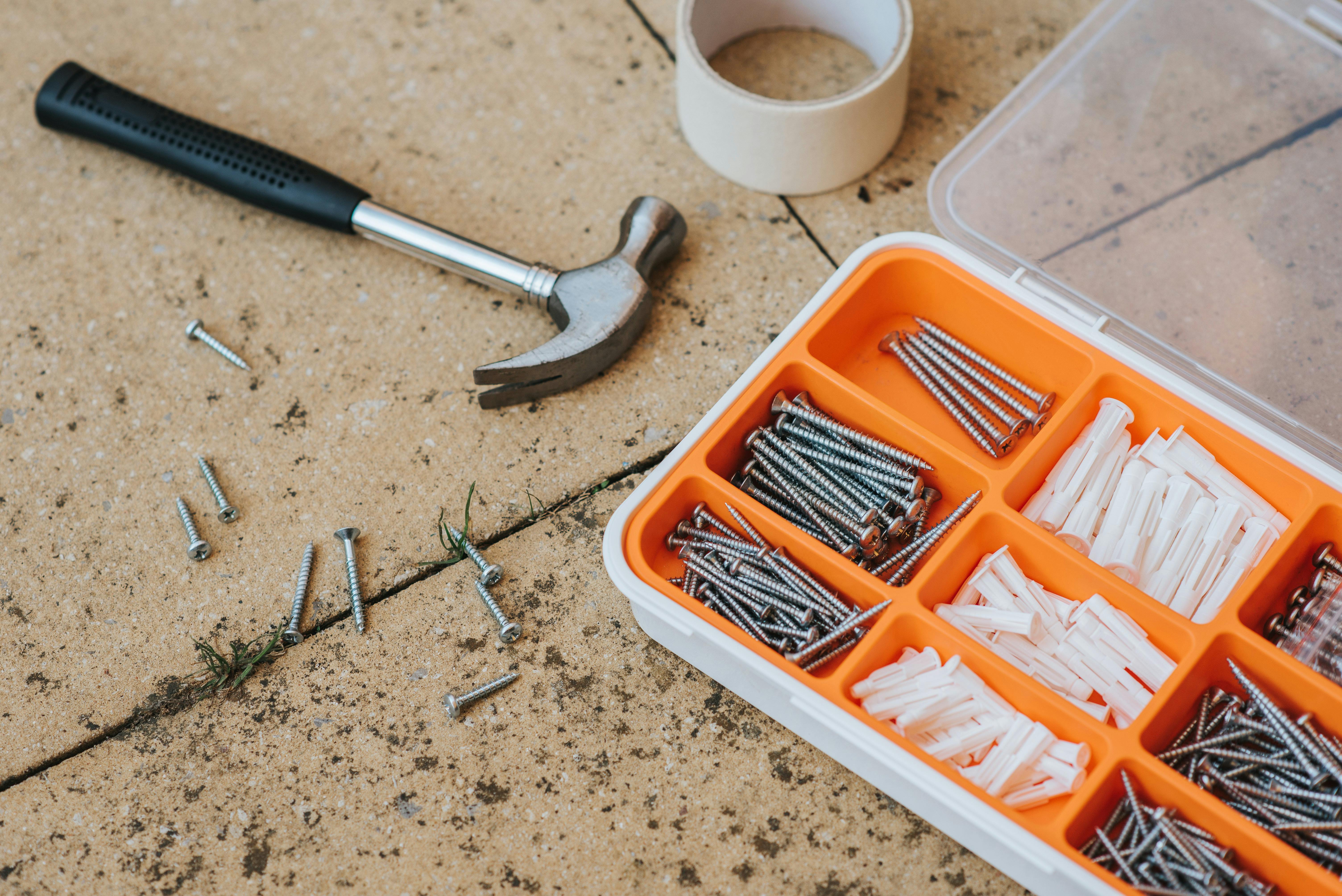
A stripped screw head turns a five-minute job into an hour of drilling and swearing. The cause is mechanical and predictable, which means it can be designed out of the way you work.
The driver climbs out under load
Screw recesses are tapered so the bit can find them easily. That same taper means the bit is pushed upward whenever it meets resistance, a behaviour known as cam-out.
Cam-out was originally a feature rather than a fault. On early production lines it protected assemblies from over-tightening before torque-limiting drivers were common.
In a domestic repair it is simply destructive. Once the bit lifts even slightly, it grinds the corners off the recess and each subsequent turn has less metal to grip.
Downward pressure matters more than torque
Most people who strip screws are pushing too little and turning too hard. The bit needs a firm axial load to stay seated in the recess while the thread does its work.
The usual guidance is that a substantial share of your effort should go into pressing the driver into the screw rather than rotating it. Lean over the work so your body weight is behind the tool.
This is also why stripping happens more often overhead or at an awkward angle. You cannot press hard on a screw you are reaching sideways to install.
The bit must match the recess exactly
Cross-head screws come in several incompatible patterns that look almost identical. Fitting the wrong one puts contact on a few small points instead of across the full flank.
Bits also wear. The tips round over gradually, and a worn bit will strip screws that a fresh one would drive without complaint, so they are consumables rather than permanent tools.
Where a fastener will be removed repeatedly, hex or star recesses grip far better because their flanks are parallel and generate no cam-out at all.
Resistance usually means something else is wrong
A screw that suddenly stops turning is rarely tight. It has hit something hard, run out of pilot hole, or bound against the material it is passing through.
Continuing to force it destroys the head. Backing the screw out, clearing the hole and pre-drilling a pilot in dense timber solves the underlying problem instead.
Driver clutches exist for the same reason. Setting the clutch low enough that it slips before the head gives way protects both the fastener and the surrounding material.
Removing one that has already gone
A rubber band or a scrap of cloth pressed into the recess fills the rounded space and can give a bit enough purchase for one careful turn.
Failing that, extractors cut a reverse thread into the head and wind it out. They work best on screws that are stuck rather than seized into corroded metal.
If the head shears off entirely, the shank can usually be gripped with pliers once the surrounding material is eased away, which is slower but far less damaging than drilling.
Also by Ines Cardoso
- Ceilings, and why nobody looks at themDesign & Space
- Growing herbs properlyPlants & Garden
- Buying less in the first placeOrganising
- Choosing and arranging artDesign & Space